

Beyond Awareness: Supporting Student Mental Health in Higher Education
Mental health has become an important part of the higher education experience, yet awareness alone does not ensure that students receive the support they need. Academic pressure, financial concerns, social isolation, uncertainty about the future, and the challenge of adjusting to new environments can affect how students cope with university life. For institutions, the challenge is to move beyond recognizing these pressures and build pathways that students can access, trust, and use.
With World Mental Health Day observed on October 10, 2026, the focus is especially timely. This year’s global theme, “Lived experiences heard: real voices, real change,” emphasizes giving people with lived experience a meaningful role in shaping mental health services and decisions. In higher education, that principle offers a useful direction, students should not only be recipients of the care, but active voices in shaping how that support works.
Moving From Awareness to Accessible Support
Mental health awareness campaigns can reduce stigma and encourage students to seek help, but awareness is only the starting point. Students also need clear pathways to assistance, flexible availability, and confidence that seeking help will not negatively affect their academic experience.
A strong campus approach should make help visible throughout the student experience rather than limiting it to counseling centers. Orientation programs, academic advising, student services, residence teams, and digital platforms can all help students identify where to turn when they need assistance.
Access also matters. A student may recognize that they are struggling but still avoid seeking help because of limited time, cost concerns, uncertainty about where to go, or discomfort discussing personal issues. Support systems therefore need multiple entry points, including confidential counseling, peer support, self-guided resources, crisis pathways, and referrals to external care when more specialized assistance is needed.
The aim is not to treat every student as a patient, but to ensure that anyone experiencing difficulty can find appropriate help without unnecessary barriers, delay, or confusion.
Building Support into Everyday Student Life
Mental health services can be more responsive when they are connected to the ordinary realities of campus life. Students do not experience well-being separately from their studies, finances, relationships, housing, or future plans. Institutions can therefore strengthen care systems by addressing the environments in which stress develops.
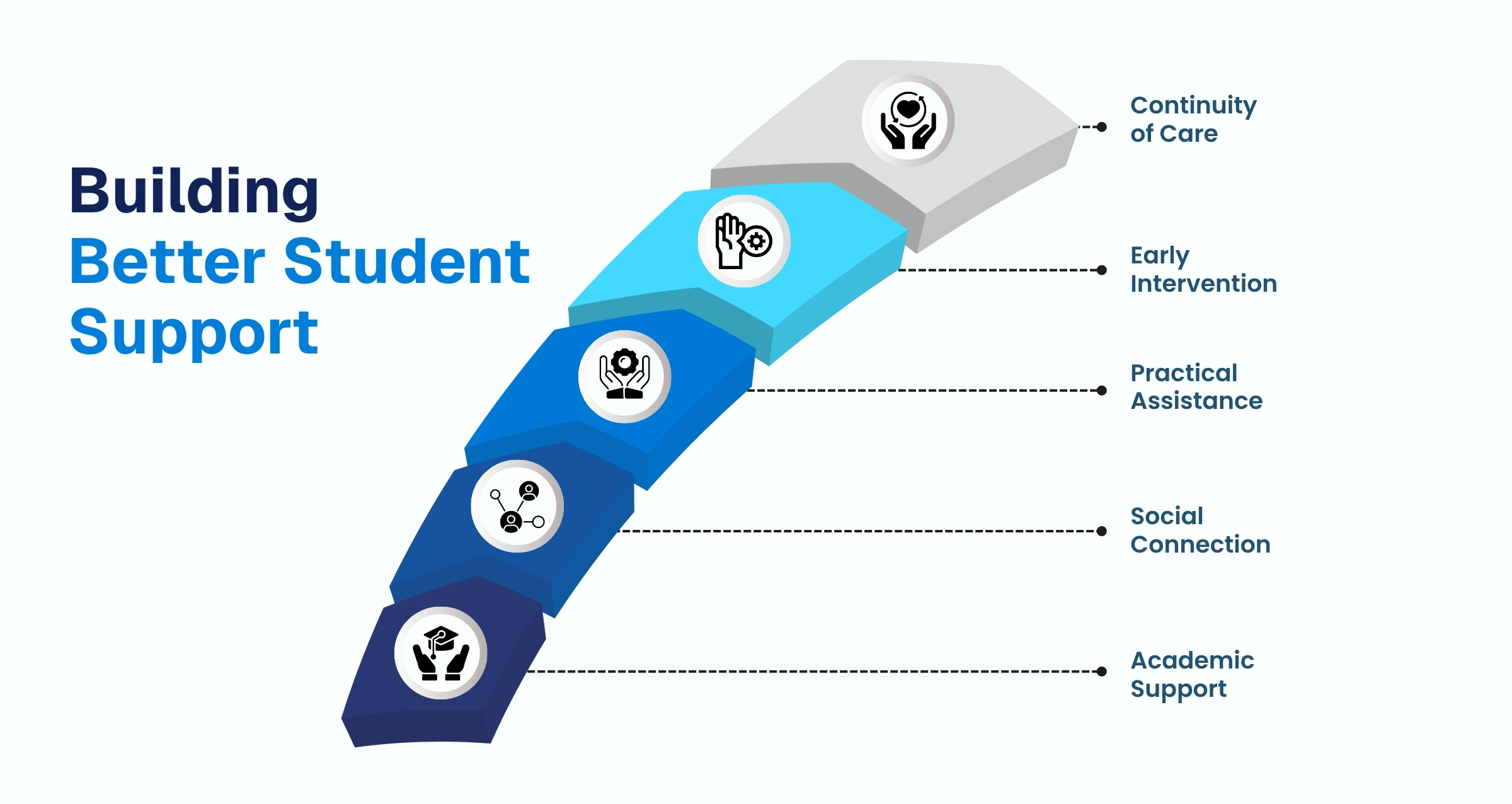
- Academic Support: Flexible advising, reasonable communication around deadlines, early identification of students who are struggling academically, and reachability to learning programs can reduce avoidable pressure.
- Social Connection: Peer networks, student communities, mentoring, clubs, and inclusive campus activities can help reduce isolation and create opportunities for students to build relationships.
- Practical Assistance: Financial guidance, housing support, accessibility services, and career counseling can address pressures that often affect emotional well-being.
- Early Intervention: Staff who regularly interact with students can be equipped to recognize signs of distress and understand appropriate referral pathways without being expected to act as mental health professionals.
- Continuity of Care: Students who need more specialized care should have clear referral routes and follow-up options rather than being left to navigate complex systems alone.
These efforts can make mental health care more integrated into student life, but their effectiveness also depends on understanding what students actually need and how they experience the available services.
Listening to Students Before Designing Solutions
Support programs are more likely to reflect real student needs when students have meaningful opportunities to influence their design. Surveys, focus groups, student advisory groups, peer-led initiatives, and regular feedback can reveal barriers that administrators may not see from service-use data alone.
This is particularly relevant to this year’s mental health theme. Listening should not be treated as a symbolic exercise in which students are asked to share experiences after decisions have already been made. Their feedback can inform how services are structured, where assistance is offered, what language is used, and which barriers need attention.
Student participation should also reflect different experiences across the campus. International students, students living away from family, working students, students with disabilities, and those facing financial or social pressures may encounter different obstacles to seeking help. A single intervention model may therefore leave important needs unaddressed.
Creating a Culture Where Seeking Help Is Normal
Stigma remains one reason students may hesitate to discuss mental health concerns. Institutions can address this by making conversations about well-being more ordinary and by communicating that seeking help is a legitimate part of managing university life.
Messages should go beyond telling students to “reach out.” They should explain where to go, what happens after making contact, what confidentiality means, and what alternatives exist if one form of provision does not work. Clear information can reduce uncertainty at the moment when a student decides whether to seek assistance.
Faculty and staff also have a role, particularly because they may notice changes in attendance, participation, or academic performance before a student approaches a guidance service. Their role is not to diagnose students. Their role involves responding appropriately, communicating concern, and connecting students with qualified services when needed.
Measuring Whether Support Actually Works
Institutions also need to examine whether their mental health initiatives produce meaningful results. Counting the number of counseling appointments or awareness events provides useful operational information, but it does not show the full effect of an intervention system.
Useful evaluation can include waiting times, student awareness of available services, referral completion, satisfaction with wellbeing resources, barriers to access, repeat service use, and changes in students’ reported sense of belonging or well-being. Qualitative feedback is equally valuable because numbers may not explain why students avoid a service or what would make it easier to use.
Evaluation should lead to improvement. If students know a service exists but cannot reach it quickly, the problem is not awareness. If students attend an event but remain unsure where to seek help, the communication strategy may need revision. If certain groups use services less often, institutions should examine whether convenience, trust, cost, or cultural factors are contributing.
A More Responsive Approach to Student Mental Health
Student mental health cannot be addressed through a single program or an annual awareness campaign. It requires an environment in which resources are visible, accessible, responsive, and connected to everyday student needs.
The significance of this year’s focus on lived experiences lies in creating space for that wider conversation. Its emphasis on lived experience provides a reminder that effective support should be shaped with students, informed by what they encounter, and improved through their feedback.
For higher education, the goal is not simply to encourage students to speak about mental health. It is to make sure their experiences lead to practical improvements. When institutions combine accessible services, early support, student participation, practical assistance, and continuous evaluation, mental health becomes part of how student success is supported rather than a separate issue addressed only when difficulties become severe.
The strongest approach begins with listening but does not end there. Students need systems that respond to what they say, remove barriers to seeking help, and adapt when their needs change. That is how awareness becomes meaningful assistance, and how higher education can create environments in which students have a stronger opportunity to study, connect, and thrive.
Data Insights
The 2024–2025 Healthy Minds Study reported that only about 38% of students had received therapy or counseling during the previous year, while lack of time, financial concerns, and a preference to handle problems independently remained among the leading barriers to treatment. The finding shows that simply having services available does not necessarily mean students will use them.
A June 2026 Student Voice survey found that 36% of college students said at least several people on campus knew them in a way that made them feel they mattered, while about one-quarter were unsure whether anyone really knew them or said they felt “invisible.” The findings highlight the importance of creating campus environments where students can develop meaningful connections and feel recognized.
Conclusion
World Mental Health Day 2026 is a reminder that meaningful progress in student mental health depends on what happens after awareness is created. Higher education institutions need to turn what they hear from students into practical action.
The goal is not to eliminate every source of stress, but to ensure students know where to turn, feel comfortable seeking help, and receive appropriate care when they need it. Awareness starts the conversation; responsive action gives it value.
Latest
Trends blogs
- Skills and the Future of Work: How Employer Expectations Are Changing
- The Changing Role of Technology in Education: From Digital Classrooms to AI
- Preparing Universities for the AI Era: A Guide for Institutional Leaders
- The Future of AI Education: How Universities Are Equipping Students for Success
Focus blogs