

How Science Education Can Prepare Students to Solve Global Challenges
Observed every year on November 10, World Science Day for Peace and Development highlights the importance of science in building a more informed, sustainable, and peaceful world. It also offers an opportunity to reconsider what science education should achieve. As societies face complex problems such as climate change, food insecurity, emerging diseases, and environmental degradation, students need more than a basic understanding of scientific concepts and principles. They need to know how to question information, investigate problems, evaluate evidence, and apply their knowledge to practical situations.
Introducing these skills early in science-based education lays the groundwork for deeper understanding. When students move beyond memorizing facts and begin exploring how scientific principles relate to everyday life, they become better equipped to understand global issues and contribute to meaningful solutions. Preparing them for this responsibility requires a learning experience built around curiosity, critical thinking, experimentation, and collaboration.
Science Education Must Develop the Ability to Think Critically
One of the most important contributions of science education is the development of critical thinking. Students encounter scientific information through textbooks, news reports, social media, and digital platforms. They need to distinguish reliable evidence from misleading claims, understand how conclusions are reached, and recognize when further investigation is necessary.
Scientific learning provides a structured way to develop these abilities. Students learn to examine a question, form a hypothesis, collect information, test possible explanations, and interpret results. They also discover that scientific conclusions depend on evidence and may change when better information becomes available.
The importance of these skills extends beyond the classroom. Consider public discussions about climate change, vaccination, water quality, or environmental pollution. Each involves interpreting data, understanding risks, and making informed decisions. The OECD’s PISA (Program for International Student Assessment) 2025 assessment found that approximately 74% of students across OECD countries achieved at least baseline proficiency in science, while only 7% reached the highest proficiency levels. This highlights the need to help more students progress beyond basic scientific understanding and develop the ability to evaluate evidence, investigate complex questions, and apply scientific knowledge independently.
Connecting Science Lessons to Global Challenges
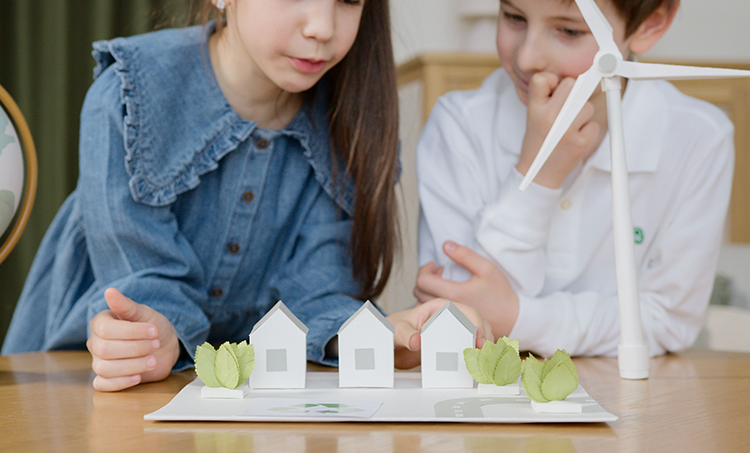
Science becomes more meaningful when students understand how classroom concepts relate to real-world problems. Subjects such as biology, chemistry, physics, and environmental science offer different ways to explore worldwide issues. For example, studying climate change allows students to examine atmospheric conditions, energy consumption, changing weather patterns, and ecosystem disruption through practical activities such as analyzing local temperature and rainfall records.
Science literacy development also introduces students to possible responses to environmental problems, including sustainable energy, water conservation, and ecosystem restoration. The OECD’s PISA 2025 environmental science assessment found that approximately three-quarters of students across OECD countries achieved at least baseline proficiency in environmental science. It also found that 82% believed collective action could address environmental problems, while only 68% felt confident in their ability to collaborate effectively.
The same approach applies to public health and food security. Studying microorganisms and disease transmission helps students understand health challenges, while exploring soil composition, plant biology, and agricultural technology introduces the science behind food production. Examining water chemistry and pollution further highlights the importance of protecting natural resources. These connections help students see how scientific knowledge can contribute to practical solutions beyond the classroom.
Building Curiosity Through Experiments and Exploration
Fostering curiosity encourages the investigation and exploration that are essential to scientific learning. Encouraging students to ask questions and investigate unfamiliar ideas helps them develop a deeper understanding of how the world works. Experiments, laboratory activities, field observations, and project-based assignments allow them to explore concepts through observation and testing instead of relying entirely on textbook explanations.
For example, a water quality project could involve collecting samples from different local sources, measuring pH levels, and comparing results. Similarly, studying plant growth can help students examine how light, temperature, soil conditions, and water availability influence development. These activities develop patience, accuracy, critical observation, and the ability to reconsider conclusions when evidence suggests otherwise.
Schools do not necessarily need advanced laboratories to encourage scientific exploration. Simple experiments, outdoor activities, locally available materials, and digital resources can provide meaningful learning opportunities. The focus should be on giving students the freedom to investigate questions while guiding them through a structured scientific process.
Preparing Students to Address Public Health and Food Security
Science learning helps students understand how scientific research translates into better healthcare and disease prevention. Lessons in biology and microbiology introduce how pathogens spread, how vaccines stimulate immune responses, and how antimicrobial resistance develops. Students can also explore how diagnostic tests, medical imaging, and epidemiological research help identify diseases and guide treatment. These concepts build an understanding of preventive healthcare and the scientific processes behind public health decisions.
Agricultural science offers another important area of practical application. Students can examine how plant genetics, biotechnology, and soil science contribute to developing high-yielding, disease-resistant crops. They can also learn how precision agriculture, automated monitoring, and efficient irrigation systems help farmers improve productivity while reducing resource use. Exploring food preservation, storage methods, and supply chain innovations further demonstrates how scientific knowledge can reduce post-harvest losses and improve access to nutritious food.
Connecting these subjects to real-world applications helps students recognize the contribution of scientific research to healthier populations and more reliable food systems. It also encourages them to consider how future discoveries can address persistent challenges in healthcare and agriculture.
Developing Collaboration and Interdisciplinary Thinking
Broad global concerns such as climate change, disease prevention, food insecurity, and environmental degradation involve interconnected factors that require knowledge from multiple disciplines, including science, engineering, economics, and social sciences. Science education should therefore encourage students to collaborate, exchange ideas, and approach problems from different perspectives through group investigations, experiments, research assignments, and community-based projects.
For example, a project on local waste management could involve examining plastic pollution, exploring recycling methods, measuring waste generation, and proposing practical improvements. Such activities help students develop teamwork, communication, and problem-solving skills while teaching them to consider different viewpoints. They also demonstrate how collaboration and knowledge-sharing contribute to scientific developments.
Practical ways to bring global challenges into science education
Schools can make scientific learning more relevant through activities such as:
- Community-based investigations: Examine local air pollution, water quality, waste disposal, or biodiversity and connect observations to broader environmental concerns.
- Interdisciplinary projects: Combine biology, chemistry, physics, mathematics, and technology to investigate practical problems.
- Scientific debates: Encourage students to evaluate evidence and discuss different approaches to issues such as renewable energy, vaccination, and conservation.
- Innovation challenges: Give students opportunities to develop simple prototypes, sustainable solutions, or research-based proposals addressing community needs.
These approaches make scientific learning more active and help students recognize that their knowledge has applications beyond examinations and academic assignments.
Making Science Education Accessible and Inclusive
Preparing future generations to address global issues also requires ensuring that quality curriculum reaches students from different social and economic backgrounds. Access to laboratories, qualified teachers, digital resources, scientific equipment, and practical learning opportunities remains uneven. Students in under-resourced schools may have limited opportunities to conduct experiments or participate in research-oriented activities, affecting their confidence, interest, and ability to pursue scientific careers.
The importance of practical learning is reflected in the State of Classroom Engagement Report: Science Edition, a global survey involving more than 6,000 administrators, teachers, parents, and students. The report found that only 55% of students worldwide regularly receive hands-on science learning opportunities. It also found that students are nearly 1.5 times more confident in learning science when they have hands-on experiences.
Schools can address these barriers through affordable experiments, shared laboratory facilities, science clubs, community partnerships, and accessible digital learning resources. Teacher development is equally important. Educators need opportunities to strengthen their subject knowledge and adopt teaching approaches that encourage investigation, discussion, and independent thinking. This education should also give students equal opportunities to participate in scientific exploration, regardless of their gender, location, disability, or economic circumstances. A wider range of perspectives strengthen scientific inquiry and helps ensure that future solutions consider the needs of different communities.
Encouraging Responsible Scientific Thinking
Scientific knowledge creates opportunities for progress, but its application also involves responsibility. Advances in biotechnology, artificial intelligence, genetic research, and energy production raise questions about safety, privacy, environmental consequences, and ethical decision-making.
Students should understand that scientific development is not automatically beneficial simply because it is innovative. They need to examine who benefits from an advancement, what risks it may create, and how its effects could influence society and the environment.
For example, studying genetic engineering can introduce discussions about medical possibilities, agricultural applications, biodiversity, and ethical boundaries. Exploring artificial intelligence can help students understand its scientific foundations while considering questions about data reliability, bias, and responsible use.
Developing this awareness prepares students to approach future discoveries with curiosity as well as sound judgment. It also reinforces the importance of transparency, evidence, public participation, and accountability in scientific progress.
Conclusion
World Science Day for Peace and Development is a reminder that advances in science must remain connected to human needs and the well-being of the planet. Schools have an important role in preparing students to contribute to that progress. By making science learning more practical, investigative, collaborative, and accessible, educators can develop generations capable of understanding complex problems and evaluating possible solutions. The goal is to help students carry scientific knowledge beyond the classroom and use it thoughtfully to build healthier communities, protect natural resources, and address the challenges they will inherit.
Latest
Trends blogs
- How Science Education Can Prepare Students to Solve Global Challenges
- Governing AI in Higher Education: Balancing Innovation, Accountability, and Risk
- Skills and the Future of Work: How Employer Expectations Are Changing
- The Changing Role of Technology in Education: From Digital Classrooms to AI
Focus blogs