

Give to Gain: Strengthening Women’s Leadership Through Education

The theme “Give to Gain” highlights a powerful truth about progress: when opportunities, knowledge, and support are extended to women, societies gain stronger economies, healthier communities, and more inclusive leadership. Education stands at the center of this exchange. It is both a pathway to personal advancement and a catalyst that enables women to influence institutions, shape policies, and guide future generations. Despite significant strides in access to schooling, women around the world continue to face structural barriers that limit their leadership potential. Strengthening women’s leadership through education requires more than enrollment numbers; it demands environments that build confidence, critical thinking, and decision-making capacity. As the global landscape grows more complex, leadership that reflects diverse perspectives is essential. Supporting women’s education strengthens communities by enhancing leadership skills critical in today’s challenges. When women gain knowledge and leadership skills, the benefits ripple outward, transforming families, workplaces, and nations in ways that reinforce the promise embedded in the idea of giving to gain.
Education as the Foundation of Leadership
Education equips women with the intellectual tools and social awareness necessary for leadership. Literacy and numeracy open doors to information, while higher education expands analytical ability and exposure to global issues. Beyond academic knowledge, educational experiences cultivate communication skills, ethical reasoning, and resilience, which are qualities essential for guiding teams and institutions. Classrooms also provide spaces where women can practice leadership roles through debates, collaborative projects, and community initiatives.
Research consistently shows that education correlates with increased participation in civic and economic life. According to World Bank education statistics, each additional year of schooling for girls significantly raises their future earnings and likelihood of participating in decision-making processes. These outcomes demonstrate that education is not merely preparatory; it actively shapes leadership trajectories by expanding opportunities and expectations.
Leadership development through education also challenges limiting social norms. When women occupy visible academic and professional spaces, they redefine perceptions of authority and competence. Younger generations benefit from these examples, creating a cycle in which education produces leaders who inspire others to pursue similar paths.
Breaking Barriers Through Access and Inclusion
Access to education remains uneven across regions and socioeconomic groups. Financial constraints, cultural expectations, and safety concerns continue to prevent many girls from completing their studies. Addressing these barriers is essential for strengthening leadership pipelines. Scholarships, safe transportation, and inclusive school policies play a critical role in ensuring that education reaches those who need it most.
Inclusive education also means recognizing diverse learning needs and backgrounds. Women from rural communities, minority groups, and marginalized populations often face compounded disadvantages. Providing equitable resources enables them to engage effectively and contribute unique perspectives to leadership discourse. This diversity enriches decision-making processes and enhances institutional effectiveness.
Digital learning platforms have emerged as valuable tools for expanding access. Online courses and remote learning opportunities allow women to pursue education while balancing family and professional responsibilities. These flexible pathways are particularly important for adult learners seeking to re-enter education or advance their careers. By removing geographic and temporal constraints, technology broadens the reach of leadership education.
Building Confidence and Agency
Leadership is not solely about knowledge; it also depends on confidence and the belief in one’s capacity to influence change. Educational environments that encourage participation, questioning, and independent thought help women develop this sense of agency. Mentorship programs, leadership workshops, and experiential learning opportunities provide practical exposure to real-world challenges.
Participation in extracurricular activities such as student governance, public speaking forums, and community service projects strengthens leadership identity. These experiences allow women to practice decision-making, negotiation, and conflict resolution in supportive settings. Over time, such engagement transforms self-perception from passive participant to active leader.
Studies on leadership development highlight the importance of role models. According to the International Labour Statistics, women hold only about one-third of managerial positions globally, highlighting the need for stronger leadership pathways through education. Exposure to successful women leaders demonstrates that leadership is attainable and normalizes women’s presence in positions of authority. Educational institutions play a crucial role in showcasing these examples through guest lectures, case studies, and networking opportunities.
Education and Economic Empowerment
Economic independence is closely linked to leadership capacity. Education enhances employability and access to higher-paying professions, enabling women to influence financial decisions within households and organizations. When women control resources, they are more likely to invest in health, education, and community development, amplifying the benefits of their leadership.
Closing gender gaps in education and employment could significantly boost global economic growth. This connection underscores the economic rationale for investing in women’s leadership education. Empowered women contribute not only as employees but also as entrepreneurs, innovators, and policymakers.
Education in fields traditionally dominated by men, particularly science and technology, is especially important. Encouraging women to pursue these disciplines expands leadership representation in sectors shaping the future. Interdisciplinary education further enhances adaptability, enabling women to navigate complex challenges that require both technical expertise and social insight.
Transforming Institutions Through Women’s Leadership
As more educated women enter leadership roles, institutions themselves begin to change. Diverse leadership teams are associated with improved problem-solving, ethical governance, and organizational performance. Women leaders often bring collaborative approaches and attention to social impact, complementing traditional management styles.
Educational institutions can accelerate this transformation by integrating leadership training into curricula across disciplines. Courses on ethics, communication, and strategic thinking prepare women for roles beyond technical specialization. Partnerships between academia and industry create pathways for internships and leadership placements, bridging the gap between education and practice.
Policy frameworks also influence outcomes. Governments that prioritize girls’ education and leadership development create environments where women can thrive. Investments in teacher training, curriculum reform, and infrastructure demonstrate a commitment to long-term progress. These measures signal that empowering women through education is a national priority rather than an isolated initiative.
Advancing Women in Leadership: 6 Strategic Actions for Lasting Impact
Creating meaningful pathways for women in leadership requires more than isolated initiatives. Below are six strategic actions that integrate best practices into a cohesive leadership framework.
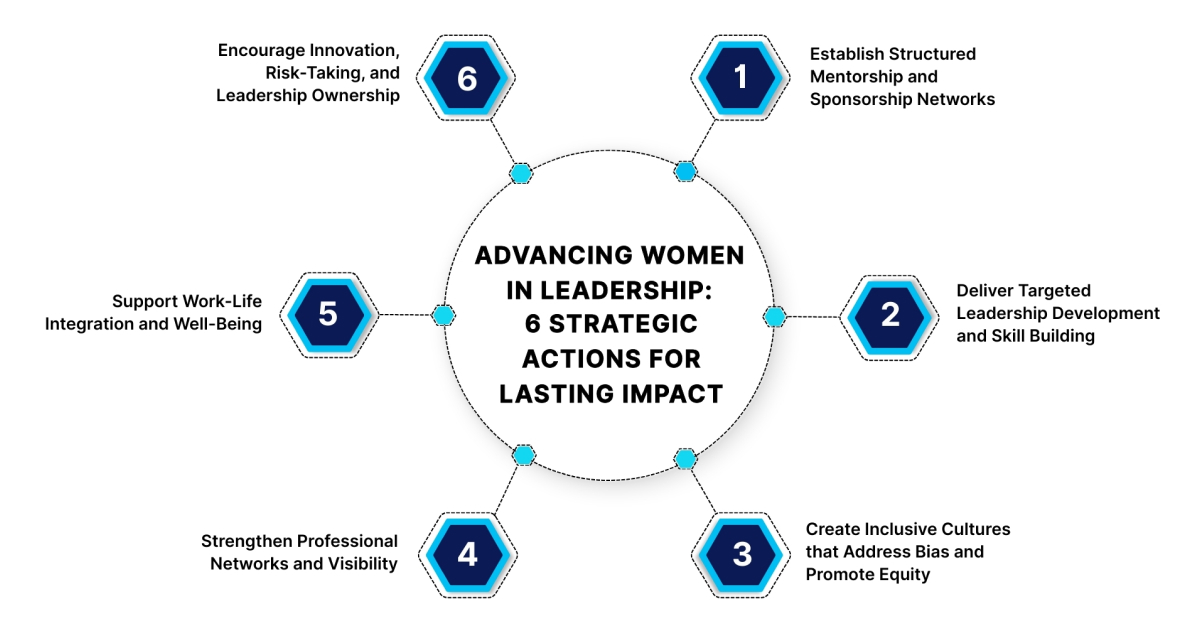
1. Establish Structured Mentorship and Sponsorship Networks
Mentorship remains one of the most powerful catalysts for leadership advancement. Experienced leaders who guide, advise, and advocate for emerging talent help women navigate professional complexities with clarity and confidence. Beyond informal advice, structured mentorship programs ensure consistent engagement and measurable outcomes.
Sponsorship goes a step further by actively championing women for promotions, high-visibility projects, and strategic opportunities. When organizations intentionally connect aspiring leaders with influential mentors and sponsors, they strengthen confidence, expand professional networks, and accelerate leadership readiness. A well-designed mentorship ecosystem signals that leadership growth is supported at every level.
2. Deliver Targeted Leadership Development and Skill Building
Formal leadership development programs provide women with the practical tools needed to excel in management and executive roles. Workshops focused on strategic thinking, negotiation, financial literacy, and decision-making help bridge skill gaps and build executive presence.
Equally important is continuous learning. Access to certifications, conferences, digital courses, and hands-on projects ensures that women remain competitive in evolving industries. Encouraging participation in cross-functional assignments also strengthens adaptability and innovation capacity. Organizations that prioritize structured development pathways create a leadership pipeline built on competence and preparedness.
3. Create Inclusive Cultures that Address Bias and Promote Equity
Systemic bias, both visible and subtle, continues to limit women’s advancement. Overcoming these barriers requires intentional cultural change. Training programs that increase awareness of unconscious bias, transparent promotion criteria, and equitable pay policies contribute to a fairer workplace.
Inclusive cultures also value diverse leadership styles. Women may lead collaboratively, empathetically, or strategically, and these approaches enrich decision-making processes. When organizations actively recognize varied leadership strengths rather than conforming to outdated stereotypes, they cultivate a more balanced and high-performing environment.
4. Strengthen Professional Networks and Visibility
Networking is more than exchanging contact information; it is about building meaningful professional relationships. Internal women’s networks, peer forums, and leadership circles create safe spaces for sharing experiences, discussing challenges, and celebrating achievements.
External networks further broaden exposure to industry trends, partnerships, and career opportunities. Encouraging women to participate in conferences, professional associations, and digital communities enhances visibility and influence. Increased representation in panels, industry events, and thought leadership platforms reinforces confidence and positions women as authoritative voices in their fields.
5. Support Work-Life Integration and Well-Being
Balancing professional growth with personal responsibilities remains a significant challenge for many women leaders. Organizations that provide flexible work arrangements, parental leave policies, and supportive caregiving options remove barriers that disproportionately affect women’s career progression.
Promoting well-being also reduces burnout and improves long-term retention. Leadership sustainability depends on environments where individuals can excel without sacrificing health or personal commitments. By embedding flexibility and empathy into organizational structures, employers create conditions where women can pursue ambitious leadership goals without compromise.
6. Encourage Innovation, Risk-Taking, and Leadership Ownership
Empowering women to step into leadership requires cultivating confidence in decision-making and innovation. Organizations should encourage women to lead projects, propose new ideas, and take calculated risks. Viewing setbacks as learning opportunities rather than failures creates a culture that supports growth and experimentation.
Providing platforms for idea-sharing sessions, innovation labs, or collaborative problem-solving workshops builds courage and creative thinking. When women are trusted with responsibility and recognized for bold contributions, they strengthen both individual capability and organizational performance.
Challenges That Persist in Moving Forward
Despite progress, challenges remain. Gender stereotypes, unequal distribution of unpaid care work, and limited access to leadership networks continue to hinder women’s advancement. Educational initiatives must address these structural issues to achieve lasting impact. Flexible learning options, childcare support, and leadership mentoring can help mitigate these obstacles.
Another challenge is ensuring education translates into real opportunities. Without supportive workplace policies and inclusive organizational cultures, educated women may still encounter barriers to leadership positions. Collaboration between educational institutions, employers, and policymakers is essential to create coherent pathways from learning to leadership.
The Multiplier Effect of Educated Women Leaders
The impact of educating women leaders extends far beyond individual success. Educated women are more likely to advocate for policies that promote equality, sustainability, and social welfare. Their leadership often prioritizes inclusive growth, ensuring that development benefits broader segments of society. The UNESCO gender equality education overview states that educated women are more likely to participate in civic life, healthcare decisions, and workforce leadership, amplifying social and economic development outcomes.
Families also experience significant gains. Educated mothers tend to support their children’s education, creating intergenerational cycles of learning and opportunity. Health outcomes improve as women apply knowledge about nutrition, sanitation, and healthcare access. Communities benefit from increased civic participation and volunteerism led by educated women.
This multiplier effect embodies the essence of giving to gain. By investing in women’s education, societies receive returns in the form of stability, innovation, and resilience. The benefits accumulate over time, reinforcing the value of sustained commitment to gender equality in education.
Conclusion
The “Give to Gain” highlights the transformative impact on women’s leadership through education. When societies commit resources, opportunities, and encouragement to women’s learning, they gain leaders capable of addressing complex global challenges with insight and empathy. Education equips women with knowledge, confidence, and economic independence, enabling them to influence decisions that shape the future. The benefits extend beyond individual achievement, strengthening families, institutions, and communities.
While obstacles persist, sustained commitment to inclusive and high-quality education can unlock the full potential of women leaders. The path forward requires collective action, recognizing that empowering women is not a zero-sum endeavor but a shared advancement. By giving women the tools to lead, the world gains a more equitable, innovative, and resilient future, one where leadership truly reflects the diversity and strength of humanity.
Latest
Trends blogs
- Governing AI in Higher Education: Balancing Innovation, Accountability, and Risk
- Skills and the Future of Work: How Employer Expectations Are Changing
- The Changing Role of Technology in Education: From Digital Classrooms to AI
- Preparing Universities for the AI Era: A Guide for Institutional Leaders
Focus blogs