


Closing the Digital Skills Gap: Challenges for Contemporary Education Policy

As digital technologies become embedded in daily life, they reshape social functions, economic growth, and workplace dynamics. Yet, education systems across the world are struggling to keep pace with these changes. The expanding mismatch between digital abilities and market demands poses significant global challenges. This gap is no longer limited to technical professions and extends across disciplines, affecting employability, productivity, and social inclusion.
Contemporary education policy faces the difficult task of preparing learners for a future that is continuously evolving. While access to technology has improved in many regions, meaningful digital competence such as critical thinking in digital environments, data literacy, and adaptive learning remains unevenly distributed. Addressing this gap requires more than curriculum updates; it demands systemic transformation across policy, pedagogy, infrastructure, and governance.
Understanding the Digital Skills Gap
The digital skills gap is multifaceted. It includes basic digital literacy, such as the ability to use devices and software, as well as advanced capabilities like coding, data analysis, and cybersecurity awareness. Importantly, it also encompasses cognitive and social skills required to navigate digital environments responsibly and effectively.
Recent data highlights the scale of the issue. According to a 2025 global jobs report, around 39% of workers’ existing skills are expected to become outdated or require transformation within the next five years, highlighting a major gap in digital readiness. This statistic underscores a fundamental problem. Despite increased access to digital tools, the ability to use them productively is far from universal.
Higher education institutions, traditionally seen as drivers of workforce readiness, are not immune to this challenge. Many graduates enter the job market without the competencies employers expect, particularly in areas such as data interpretation and digital communication. This mismatch reflects deeper structural issues within education systems.
Structural Challenges in Education Policy
Efforts to bridge the digital skills gap are often hindered by several persistent policy constraints that affect planning, implementation, and long-term impact.
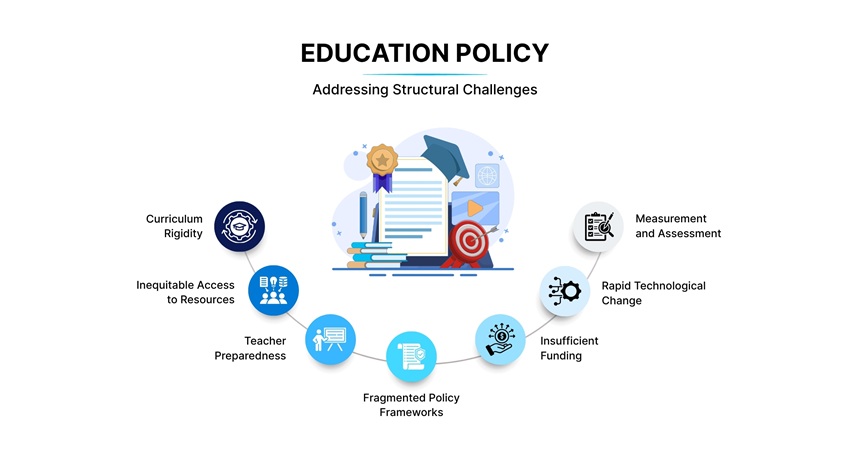
1. Curriculum Rigidity
One of the primary barriers to closing the digital skills gap is the slow pace of curriculum reform. Education systems often operate within rigid frameworks that make it difficult to integrate emerging technologies and skills. By the time new content is introduced, it may already be outdated.
A study examining digital transformation in education highlights that curriculum lag is a key contributor to skills mismatch, as educational content frequently fails to align with rapidly evolving industry requirements. This lag creates a disconnect between what students learn and what they need in real-world contexts.
2. Inequitable Access to Resources
While digital tools are more widespread than ever, access remains uneven across regions and socioeconomic groups. Students in under-resourced settings often lack reliable internet, modern devices, or exposure to advanced digital tools.
This disparity extends beyond infrastructure and also affects the quality of digital engagement and learning experiences. Even when devices are available, they may be used for basic tasks rather than skill development. Without targeted policy interventions, such inequalities risk deepening existing social divides.
3. Teacher Preparedness
Teacher preparedness is further constrained by the rapid pace of technological change, which makes it difficult for training programs to remain relevant. Many educators are introduced to digital tools without adequate guidance on how to integrate them meaningfully into pedagogy. As a result, technology is often used in a superficial way rather than to enhance critical thinking, collaboration, or problem-solving.
4. Fragmented Policy Frameworks
Education policy related to digital skills is often fragmented across different levels of governance and sectors. Lack of coordination leads to duplication of efforts and inefficient use of resources.
5. Insufficient Funding
Investing in digital infrastructure, training, and curriculum development requires substantial financial resources. Many systems struggle to allocate adequate funding, particularly in developing regions.
6. Rapid Technological Change
The pace of technological innovation makes it difficult for policies to remain relevant. Policymakers must balance long-term planning with the flexibility to adapt quickly.
7. Measurement and Assessment
Traditional assessment methods are not well-suited to evaluating digital competencies. Without reliable metrics, it is challenging to track progress or identify gaps.
Additionally, limited institutional support, lack of time for continuous learning, and insufficient incentives for upskilling discourage teachers from fully engaging with digital transformation. Without sustained investment in practical, context-specific training and ongoing support systems, efforts to build digital competence in students are likely to remain inconsistent and fragmented.
The Employability Disconnect
A major consequence of the digital skills gap is reduced employability among graduates. Employers increasingly seek candidates who can adapt to digital workflows, analyze data, and collaborate in virtual environments. However, many education systems still prioritize theoretical knowledge over practical application.
An analysis by Cengage in higher education and workforce trends reveals that only 30% of 2025 graduates secured jobs related to their field of study, while 48% reported feeling unprepared for entry-level roles. This paradox highlights a critical failure in aligning education outcomes with labor market needs.
Furthermore, the rise of automation and artificial intelligence is intensifying this challenge. Routine tasks are increasingly being replaced by machines, while demand grows for roles requiring advanced digital and cognitive skills. Education policy must therefore anticipate future trends rather than react to current gaps.
Strategies for Closing the Digital Skills Gap
Effectively addressing the digital skills gap requires a set of targeted and forward-looking strategies that align education systems with the evolving demands of a digital economy.
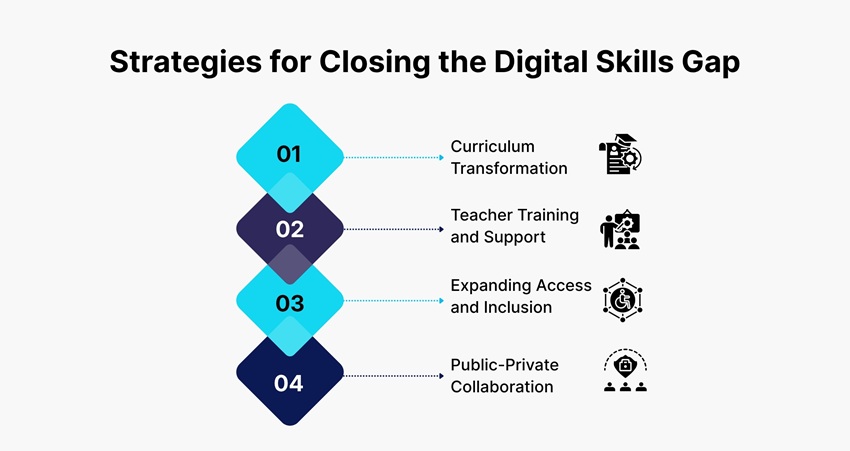
1. Curriculum Transformation
Education systems must move beyond incremental updates and embrace comprehensive curriculum redesign. This includes integrating digital skills across disciplines rather than treating them as standalone subjects.
Interdisciplinary approaches that combine technology with fields such as humanities, business, and science can help students develop a holistic understanding of digital applications.
2. Teacher Training and Support
Continuous professional development is essential for educators to stay current with technological advancements. Training programs should focus not only on technical skills but also on pedagogical strategies for digital learning.
Mentorship models, peer learning, and access to digital resources can further enhance teacher effectiveness.
3. Expanding Access and Inclusion
Policies must prioritize equitable access to digital tools and learning opportunities. This includes investing in infrastructure, subsidizing devices, and developing inclusive content that caters to diverse learners.
Special attention should be given to marginalized groups to ensure that digital transformation does not exacerbate existing inequalities.
4. Public-Private Collaboration
Public–private collaboration is essential for reducing the disconnect between education and employment by ensuring that learning remains relevant to real-world demands. When education systems actively engage with industry, they gain access to current insights on technological trends, skill requirements, and evolving workplace practices.
This collaboration can take multiple forms, including co-designed curricula, industry-led workshops, apprenticeship programs, and project-based learning opportunities that expose students to practical challenges. Beyond skill alignment, such partnerships also help institutions stay agile in responding to rapid technological change.
Innovative Approaches in Policy Design
Some education systems are experimenting with innovative approaches to address the digital skills gap:
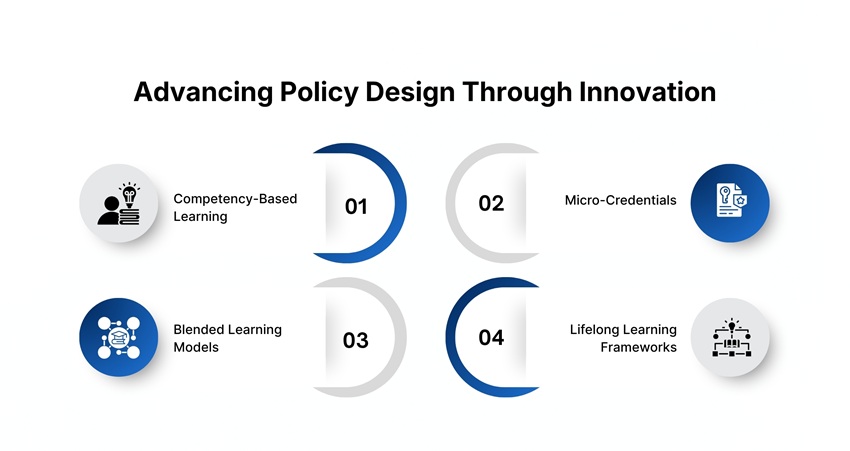
- Competency-Based Learning: Shifting focus from time-based education to mastery of specific skills
- Micro-Credentials: Offering short, targeted certifications that align with industry needs
- Blended Learning Models: Combining online and offline methods to enhance flexibility and access
- Lifelong Learning Frameworks: Encouraging continuous skill development beyond formal education
These approaches reflect a broader shift toward more flexible, learner-centered education systems.
The Role of Lifelong Learning
Closing the digital skills gap cannot be achieved solely within formal education. As technology continues to evolve, individuals must continuously update their skills throughout their lives.
Policies should therefore support lifelong learning through accessible training programs, online platforms, and recognition of informal learning. Encouraging a culture of continuous learning is essential for adapting to future challenges.
Conclusion
The digital skills gap is one of the most pressing challenges in contemporary education policy, extending beyond a technical issue to a systemic problem driven by outdated curricula, unequal access, limited teacher preparedness, and poor alignment with labor market needs. Addressing it requires a coordinated approach that rethinks traditional education models, invests in infrastructure and training, and strengthens collaboration across sectors while ensuring inclusivity so all learners can build essential digital competencies. As economies become increasingly digital, failing to act will deepen inequalities and limit opportunities, making it crucial to bridge this gap not only to enhance employability but also to enable full participation in an evolving, innovation-driven society.
Latest
Trends blogs
- Governing AI in Higher Education: Balancing Innovation, Accountability, and Risk
- Skills and the Future of Work: How Employer Expectations Are Changing
- The Changing Role of Technology in Education: From Digital Classrooms to AI
- Preparing Universities for the AI Era: A Guide for Institutional Leaders
Focus blogs