

From Degrees to Skills: Rethinking Credential Value in Higher Education

Higher education is at a critical turning point as the traditional value of academic degrees is increasingly questioned in a rapidly evolving job market. For decades, degrees have served as the primary indicator of knowledge and capability. However, the rise of digital economies, automation, and changing workplace expectations has exposed a growing disconnect between formal credentials and real-world skills. Employers are no longer satisfied with theoretical knowledge alone; they seek individuals who can apply skills in dynamic, technology-driven environments.
This shift has brought renewed attention to the need for aligning educational credentials with employability outcomes. The challenge lies in redefining degrees to reflect true competencies, not discarding them. Reimagining higher education requires a fundamental transformation in how learning is structured, assessed, and recognized.
The Growing Disconnect Between Degrees and Skills
The mismatch between what students learn and what employers require has become increasingly evident. Many graduates leave universities with strong theoretical foundations but lack practical, job-ready skills. This gap is particularly visible in areas such as digital literacy, communication, and problem-solving.
Recent data highlights the scale of this issue. The World Economic Forum’s global report found that around 39% of workers’ existing skills will need to change or be updated within the next five years due to evolving job demands. This constant evolution makes it difficult for static degree programs to remain relevant.
At the same time, employers are placing greater emphasis on demonstrable abilities rather than formal qualifications. Hiring practices are gradually shifting toward skills-based assessments, portfolios, and practical evaluations. This trend suggests that the traditional degree, while still valuable, is no longer sufficient on its own.
Rethinking the Purpose of Credentials
Credentials have historically functioned as signals of academic achievement, but their role is expanding. In today’s context, they must also represent specific competencies and practical capabilities. This requires a move from broad, generalized qualifications to more granular and transparent forms of recognition.
The concept of “credential value” is being redefined to include not only what learners know but what they can do. This shift places greater importance on measurable outcomes, such as the ability to apply knowledge in real-world scenarios.
Moreover, the increasing diversity of career paths means that a single degree may not adequately capture an individual’s skill set. Flexible and modular credential systems are emerging as a way to address this complexity.
Key Trends Accelerating Skills-Based Education and Employability
Several factors drive the transition toward skills-aligned education:
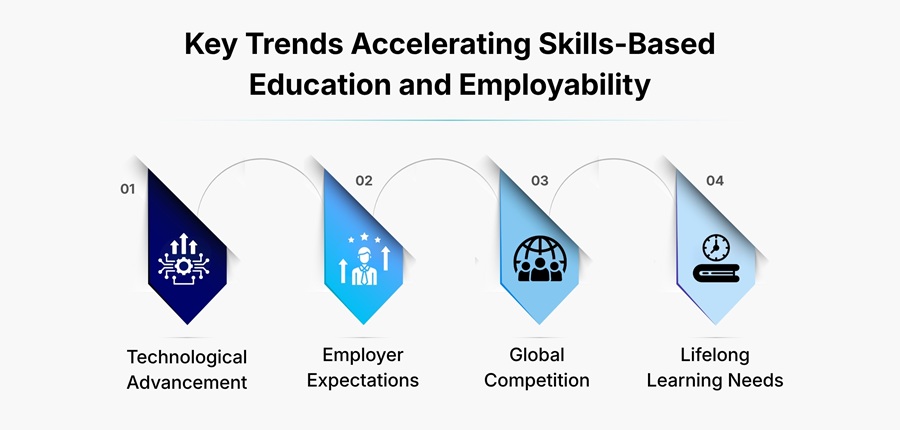
- Technological Advancement: Automation and digital tools are reshaping job roles, requiring new and continuously evolving skills.
- Employer Expectations: Organizations are prioritizing practical competencies over academic credentials alone.
- Global Competition: A more interconnected world demands adaptable and multi-skilled professionals.
- Lifelong Learning Needs: Rapid change necessitates continuous skill development beyond formal education.
These drivers underscore the pressing need to align education systems with the realities of today’s workplaces.
Strategies for Aligning Credentials with Skills
Aligning credentials with skills requires a strategic shift in how education is designed and delivered.
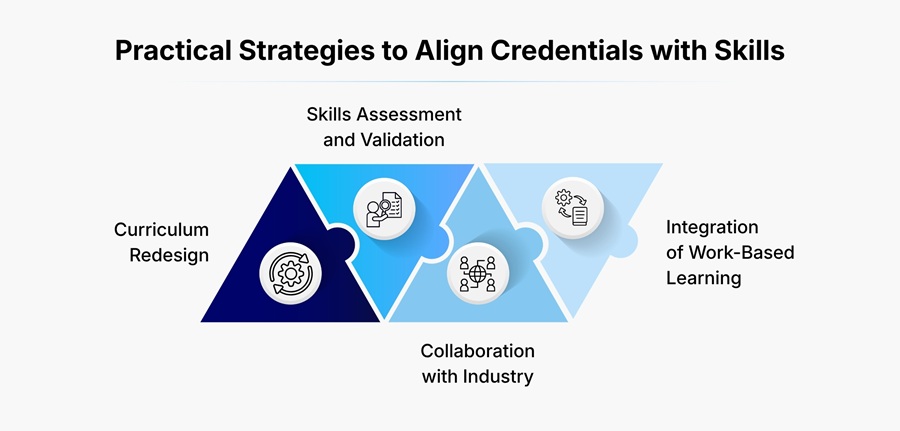
- Curriculum Redesign
Education systems must move beyond rigid, theory-heavy curricula and incorporate practical, skills-based learning. This includes project-based assignments, internships, and real-world problem-solving activities. By embedding skills within academic programs, institutions can ensure that learning remains relevant and applicable.
- Integration of Work-Based Learning
Experiential learning opportunities, such as internships and apprenticeships, play a crucial role in bridging the gap between education and employment. These experiences allow students to apply their knowledge in real-world contexts and develop essential workplace skills.
- Skills Assessment and Validation
Traditional exams are often insufficient for evaluating practical abilities. Alternative assessment methods, including portfolios, simulations, and competency-based evaluations, provide a more accurate representation of student capabilities.
- Collaboration with Industry
Close collaboration between education providers and employers is essential for understanding evolving skill requirements. Such partnerships can inform curriculum design, provide training opportunities, and ensure that graduates are better prepared for the workforce.
Emerging Models of Credentialing
Higher education is witnessing the rise of new credentialing models that aim to better reflect skills and competencies:
- Micro-Credentials: Short, targeted certifications that focus on specific skills. These credentials offer flexibility and allow learners to acquire relevant competencies quickly. They are particularly useful for upskilling and reskilling in fast-changing industries.
- Stackable Credentials: Modular learning pathways that enable students to build qualifications over time. This approach allows learners to combine multiple credentials to create a comprehensive skill profile.
- Digital Badges: Verified indicators of specific achievements or competencies. These badges can be shared online, providing employers with clear evidence of skills.
- Competency-Based Degrees: Programs that prioritize mastery of skills over time spent in class. Students progress based on their ability to demonstrate competencies rather than completing a fixed duration of study.
These models reflect a broader shift toward more flexible and transparent systems of recognizing learning.
The Role of Technology in Skills Alignment
Technology plays a crucial role in enabling the transition toward skills-based education. Digital platforms can track learning progress, identify skill gaps, and recommend personalized learning pathways. This data-driven approach enhances both teaching and learning outcomes.
In addition, online learning environments provide access to a wide range of resources, allowing students to develop skills beyond traditional classroom settings. This flexibility is particularly important in a world where continuous learning is essential.
The adoption of technology is also influencing how credentials are verified and shared. Digital credentialing systems make it easier for employers to assess the authenticity and relevance of qualifications.
Benefits of a Skills-Aligned Education System
Aligning credentials with skills offers several advantages:
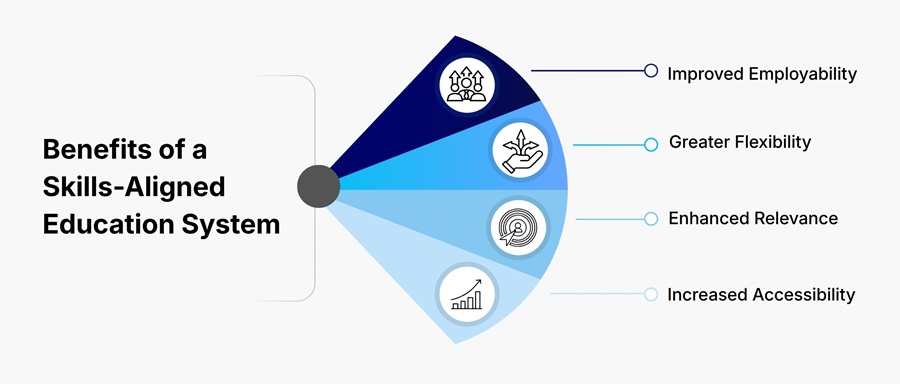
- Improved Employability: Graduates are better prepared for the workforce, increasing their chances of securing meaningful employment
- Greater Flexibility: Learners can tailor their education to meet specific career goals
- Enhanced Relevance: Education remains aligned with current industry needs
- Increased Accessibility: Flexible learning pathways make education more inclusive
A growing body of evidence supports these advantages. The 2025 annual report by Testgorilla found that 85% of employers are now using skills-based hiring practices, reflecting a strong shift away from traditional degree-focused recruitment. This reinforces the importance of aligning educational outcomes with practical competencies and real-world requirements.
Barriers to Implementing Skills-Based Learning in Higher Education
Despite its advantages, transitioning to a skills-based model presents several challenges. One major concern is maintaining the balance between depth of knowledge and practical skills. Overemphasis on immediate employability may undermine the broader educational goals of critical thinking and intellectual development.
There is also the issue of standardization. Without clear frameworks, it can be difficult to ensure consistency and credibility across different credentialing systems. Employers may struggle to interpret and compare diverse forms of certification.
Additionally, implementing these changes requires significant investment in infrastructure, training, and policy development. Institutions must be willing to adapt and innovate to remain relevant.
Key Policy Considerations for Skills-Based Higher Education Reform
Effective policy frameworks are essential for supporting the transition toward skills-aligned education. Governments and educational authorities must establish standards for credentialing, ensure quality assurance, and promote collaboration between stakeholders.
Policies should also encourage innovation while maintaining accountability. This includes supporting research, funding new initiatives, and creating incentives for institutions to adopt skills-based approaches.
Furthermore, inclusivity must remain a priority. Policies should ensure that all learners, regardless of background, have access to opportunities for skill development and credential recognition.
The Future of Higher Education
The future of higher education lies in its ability to adapt to changing societal and economic needs. Degrees will continue to play an important role, but they will need to evolve to reflect a broader range of skills and competencies.
A hybrid model that combines academic knowledge with practical skills is likely to emerge as the most effective approach. This model recognizes the value of both theoretical understanding and real-world application.
As the nature of work continues to change, education systems must remain flexible and responsive. Continuous innovation and collaboration will be key to ensuring that credentials remain meaningful and relevant.
Conclusion
Reimagining higher education to align credentials with skills and employability is no longer optional in a rapidly changing world. The traditional reliance on degrees alone is insufficient to meet evolving economic demands and workplace expectations.
By integrating skills-based learning, adopting innovative credentialing models, and strengthening collaboration with industry, education systems can better connect learning with employment. At the same time, it is important to preserve the broader purpose of education, ensuring that critical thinking, creativity, and lifelong learning remain central to preparing individuals for future challenges.
Latest
Trends blogs
- Governing AI in Higher Education: Balancing Innovation, Accountability, and Risk
- Skills and the Future of Work: How Employer Expectations Are Changing
- The Changing Role of Technology in Education: From Digital Classrooms to AI
- Preparing Universities for the AI Era: A Guide for Institutional Leaders
Focus blogs