

The Next Phase of STEM Education: The Role of Artificial Intelligence in Classroom Curricula
Artificial intelligence is reshaping how knowledge is created, applied, and updated across industries. Education systems, particularly in science, technology, engineering, and mathematics, are now responding to this shift by integrating artificial intelligence into classroom curricula. This change reflects more than a technological upgrade. It represents a transformation in how learners engage with concepts, solve problems, and prepare for complex professional environments.
STEM education has traditionally focused on content mastery, procedural knowledge, and theoretical understanding. While these remain essential, modern STEM learning increasingly emphasizes adaptability, data literacy, systems thinking, and computational reasoning. Artificial intelligence supports this evolution by enabling more interactive, responsive, and application-oriented learning environments. As AI becomes embedded into everyday tools and decision-making processes, understanding how it works and how to apply it responsibly becomes a core educational priority.
This article explores how artificial intelligence is shaping the next phase of STEM education, examining its role in curriculum design, pedagogy, assessment, equity, and workforce preparation.
Why AI Is Becoming Central to STEM Education
The accelerating pace of technological change has altered the skills required for scientific and technical work. Problem solving today often involves interacting with data systems, predictive models, automated processes, and intelligent software. As a result, STEM education must prepare learners not only to understand scientific principles but also to operate within AI-supported environments.
A 2023 global workforce report noted that more than 60 percent of emerging technical roles now require some level of data interpretation or interaction with intelligent systems, according to a labor market analysis published by a global employment research platform. This indicates that AI literacy is becoming as important as traditional numeracy or scientific reasoning.
Integrating AI into STEM curricula helps students develop computational thinking, ethical awareness, and analytical skills while strengthening their ability to work with complex systems.
AI as a Learning Tool in STEM Classrooms
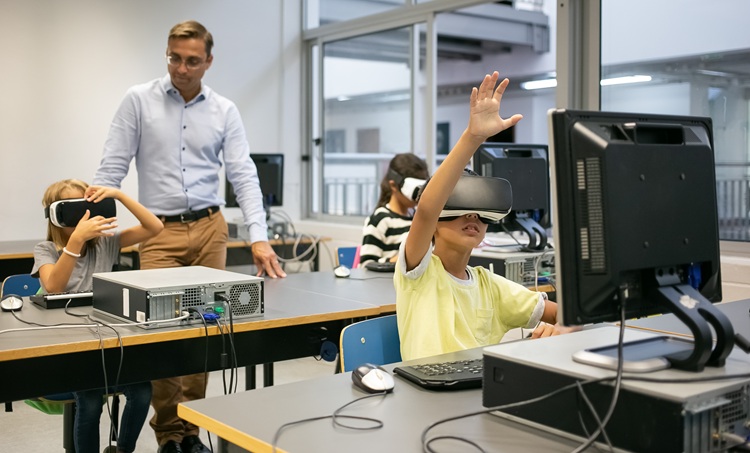
Artificial intelligence improves learning environments by enabling adaptive content delivery, interactive simulations, and real-time feedback. These capabilities allow students to explore abstract or complex phenomena through dynamic visualizations and model-based experimentation.
For example, AI-driven simulations allow learners to manipulate variables in virtual environments to observe outcomes that would be impractical or unsafe in physical labs. This supports deeper conceptual understanding in fields such as physics, chemistry, and environmental science.
AI-supported platforms can also analyze student progress and provide customized learning sequences based on performance patterns. This does not replace teachers but strengthens instructional decision-making by highlighting areas where learners may need additional support or enrichment.
Curriculum Design in an AI-Integrated STEM Framework
Curriculum design is shifting from static content delivery toward dynamic, skill-oriented learning structures. In AI-integrated STEM curricula, learning outcomes include not only subject knowledge but also data interpretation, algorithmic reasoning, and system analysis.
AI integration encourages interdisciplinary learning by connecting mathematics with computing, engineering with data science, and science with real-world modeling. Students learn to apply knowledge across domains rather than treating subjects as isolated silos.
Curriculum frameworks increasingly include competencies such as:
- Understanding how algorithms work
- Interpreting model outputs critically
- Identifying limitations and biases in automated systems
- Applying computational approaches to scientific problems
These competencies prepare learners for environments where AI functions as a collaborative tool rather than a separate discipline.
Pedagogical Shifts Enabled by AI in Curricula
Teaching strategies are evolving alongside curriculum changes. AI enables more inquiry-based and project-centered learning approaches, where students engage with real data, complex scenarios, and open-ended problems.
Instead of solving predefined textbook exercises, learners analyze datasets, build models, and test hypotheses using AI-supported tools. This strengthens higher-order thinking skills such as evaluation, synthesis, and interpretation.
Students engaged in project-based STEM learning demonstrate stronger conceptual understanding and problem-solving confidence compared to traditional instruction. This suggests that AI integration is most effective when it supports active learning rather than passive consumption of content.
Assessment in AI-Enhanced STEM Education
Assessment practices are also evolving. Traditional exams often capture recall more than application. AI enables more authentic assessment formats such as simulations, design challenges, coding tasks, and data interpretation exercises.
These assessments evaluate how students apply knowledge rather than what they memorize. Performance-based evaluation aligns more closely with real-world scientific and technical work.
AI systems can also provide formative feedback, allowing students to revise and improve their work iteratively. This supports mastery-oriented learning and encourages persistence through complex problem solving.
Preparing Students for AI-Driven Careers
One of the primary goals of AI integration in STEM education is workforce readiness. Students who understand how intelligent systems function are better prepared for roles in automation, analytics, and digital infrastructure. A 2024 technology workforce outlook reported that demand for professionals with combined STEM and data skills is projected to grow at nearly twice the rate of general employment growth.
Beyond technical proficiency, AI-enabled learning also helps students develop transferable competencies that are increasingly valued across sectors. These include problem framing, working with complex datasets, interpreting algorithmic outputs, and making informed decisions in uncertain environments. Such capabilities are relevant not only in technology-focused careers but also in fields such as healthcare, manufacturing, finance, environmental science, and public services. As AI becomes embedded in everyday organizational processes, graduates who can collaborate effectively with intelligent systems and understand their limitations will be better positioned to navigate evolving career pathways and sustain long-term employability.
Ethical and Responsible Use of AI in STEM Learning
AI integration in STEM education brings not only new tools and capabilities but also important ethical questions that learners must confront. As students interact with intelligent systems, they should develop an understanding of issues such as data privacy, algorithmic bias, fairness, transparency, and accountability. These concerns are not abstract; they affect real decisions when AI systems influence outcomes in fields like healthcare diagnostics, environmental modeling, and automated decision support. Research on AI in education highlights the need for explicit instruction on ethics so that learners can recognize the limitations and potential harms of AI tools, including how data may be collected, used, and interpreted without sufficient safeguards.
Embedding ethical considerations into STEM learning also prepares students to become responsible innovators and informed citizens in increasingly digital and interconnected societies. Teaching responsible AI use means helping learners ask questions about how models are trained, whose perspectives are represented or excluded, and how technology decisions can affect equity and social justice. This ethical lens reinforces critical thinking and supports learners in making choices that reflect not only technical competence but also societal values. Experts in education technology emphasize that ethical AI education contributes to a culture where learners are empowered to challenge biases in AI, make informed judgments about technology adoption, and advocate for transparent and accountable system design.
Equity and Access in AI-Enabled Education
As artificial intelligence becomes more integrated into educational environments, concerns about equitable access grow more urgent. AI-powered tools and personalized learning platforms hold significant potential for enhancing engagement and tailoring instruction, but these benefits are not distributed evenly. Many students around the world still face barriers to meaningful participation in digital learning, including inadequate access to devices, limited connectivity, and a lack of familiarity with digital tools. When students are unable to reach or use AI-enhanced systems effectively, the potential of these technologies to improve learning is undermined, and existing disparities are reinforced rather than reduced.
Addressing equity in AI-enabled education requires intentional strategies that support inclusion at multiple levels. Teacher preparation and professional learning are also essential, as educators need the skills to implement AI tools in ways that are pedagogically sound and sensitive to diverse learner needs. Moreover, curriculum design must consider accessibility features and cultural relevance so that AI applications support learners with different backgrounds, languages, and abilities. By prioritizing access, capacity, and inclusive design, educational systems can work toward fulfilling the promise of AI while minimizing the risk of widening gaps.
Teacher Roles in AI-Integrated STEM Education
AI does not replace educators. It reshapes their role from information providers to learning facilitators, mentors, and designers of learning experiences.
Teachers guide inquiry, support critical thinking, and contextualize AI outputs within scientific reasoning. Professional development becomes essential so educators can effectively integrate AI tools into pedagogy while maintaining strong disciplinary foundations.
This shift strengthens the human dimension of education by allowing teachers to focus on interpretation, discussion, and conceptual understanding.
Challenges in Implementing AI in STEM Curricula
Several challenges accompany AI integration. These include:
- Limited infrastructure and technical resources
- Insufficient teacher training
- Curriculum rigidity
- Concerns about data privacy and algorithm transparency
There is also the risk of overreliance on automated systems, which could weaken foundational skills if not balanced with conceptual learning.
Effective integration requires thoughtful planning, ongoing evaluation, and alignment between technology, pedagogy, and learning goals.
The Long-Term Impact on STEM Education
AI is not a temporary addition to education but a structural shift in how knowledge is created, applied, and renewed over time. Integrating AI into STEM education prepares learners for lifelong engagement with evolving technologies and complex problem spaces. Research on AI-supported learning shows that intelligent systems can strengthen analytical reasoning, conceptual understanding, and problem-solving ability by exposing learners to adaptive, data-driven learning environments. These capabilities enable learners to manage uncertainty, interpret complex information, and continue learning as technologies and professional demands change.
Beyond technical knowledge, AI-integrated STEM education builds adaptability, collaborative capacity, and the ability to work alongside intelligent systems. Educational research shows that AI-enhanced learning contexts can support creativity, innovation, and interdisciplinary problem-solving by simulating real-world scenarios that require flexible thinking and collaboration. As a result, learners develop resilience and professional agility that extend beyond specific tools, enabling them to navigate future work environments with confidence, ethical awareness, and a readiness for continuous skill development.
Why Social Emotional Learning (SEL) Is the Focus for Educators Today
Discover how social-emotional learning strengthens academic outcomes, supports mental well-being, and empowers students with skills for life.
Download the whitepaper
Conclusion
The next phase of STEM education is defined by integration, not substitution. Artificial intelligence enhances learning environments, supports deeper engagement with complex concepts, and aligns education with modern workforce realities.
When implemented thoughtfully, AI strengthens inquiry-based learning, improves assessment authenticity, supports personalized learning, and prepares students for technologically advanced careers. At the same time, ethical awareness, equity, and human guidance remain essential.
The role of artificial intelligence in STEM curricula is not to replace traditional learning but to extend it. By combining scientific foundations with intelligent tools, education systems can equip learners to understand, apply, and shape the technologies that increasingly define the world around them.
Latest
Trends blogs
- Skills and the Future of Work: How Employer Expectations Are Changing
- The Changing Role of Technology in Education: From Digital Classrooms to AI
- Preparing Universities for the AI Era: A Guide for Institutional Leaders
- The Future of AI Education: How Universities Are Equipping Students for Success
Focus blogs