

Executive Education in the AI Era: Shifting Models and New Realities

Leadership development is being reshaped by rapid advances in artificial intelligence, altering both the expectations placed on executives and the ways in which they learn. What was once a structured, periodic process has evolved into a more fluid and continuous journey driven by technological change. Executive education is evolving beyond traditional boundaries to meet the dynamic demands of today’s leaders. As organizations navigate increasingly complex environments, leaders must develop capabilities that combine strategic thinking with digital understanding, making the transformation of executive education both necessary and inevitable.
The Changing Expectations of Leadership
The role of modern executives extends far beyond conventional decision-making. Leaders are now expected to interpret data-driven insights, understand automated systems, and respond quickly to shifting market conditions. This has created a growing demand for skills that blend technological awareness with business acumen.
The World Economic Forum indicates that nearly half of existing workplace skills are expected to change due to technological advancements, underscoring the need for continuous learning among professionals. This shift highlights the urgency for executive education programs to evolve in ways that prepare leaders for emerging challenges rather than past practices.
From Periodic Learning to Continuous Development
Executive education is moving away from isolated training programs toward ongoing development models. Short-term courses are being complemented by modular learning pathways that allow executives to build skills progressively over time. This transition reflects the reality that knowledge quickly becomes outdated in a technology-driven environment.
Continuous learning models enable leaders to stay updated without stepping away from their professional responsibilities. Digital platforms and on-demand content allow for flexible engagement, ensuring that learning can be integrated seamlessly into daily workflows. This shift also supports more immediate application of knowledge, improving both individual performance and organizational outcomes.
AI-Driven Transformation of Learning Experiences
Executive education is being reshaped at its core, with artificial intelligence transforming both how it is delivered and how leaders engage with it. Learning platforms now use advanced analytics to understand user behavior, identify skill gaps, and recommend relevant content. This creates a more personalized learning journey that adapts to individual needs and professional goals.
AI also enhances engagement through interactive tools such as simulations and scenario-based exercises. These methods allow executives to test strategies in realistic environments, strengthening their ability to manage complex situations. Additionally, AI-powered insights help organizations evaluate the effectiveness of training programs, making learning more measurable and outcome-oriented.
Expanding Access Through Digital Ecosystems
The growth of digital infrastructure has significantly expanded access to executive education. Online platforms enable participation from diverse geographic regions, making high-quality learning opportunities more widely available. This shift has reduced barriers associated with location and scheduling, creating a more inclusive learning environment.
The International Telecommunication Union’s recent data shows that global internet penetration has crossed 70% of the population, reflecting increased accessibility to digital learning platforms and resources. This widespread connectivity is a key factor driving the expansion of executive education across industries and regions.
Key Challenges in Adapting Executive Education to the AI Era
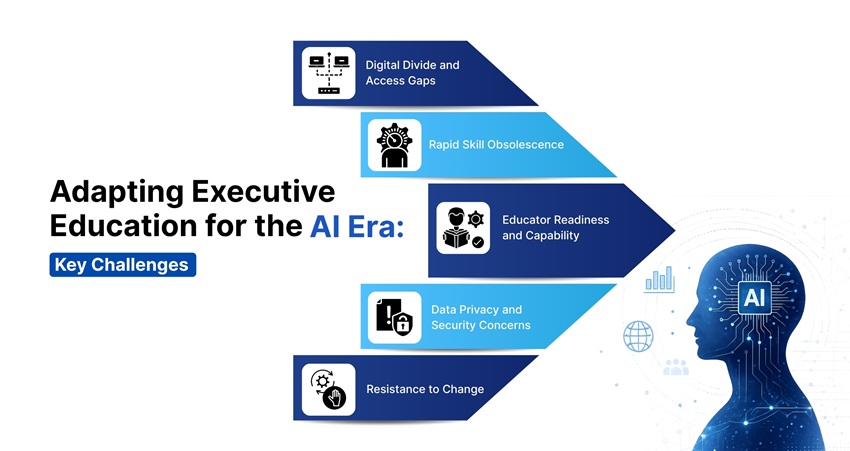
The transition toward AI-enabled executive education presents several challenges that must be addressed to ensure effective implementation:
-
Digital Divide and Access Gaps
Unequal access to technology and connectivity can limit participation in digital learning programs, particularly in regions with underdeveloped infrastructure. -
Rapid Skill Obsolescence
The pace of technological change makes it difficult for learning programs to remain relevant, requiring constant updates to curriculum and content. -
Educator Readiness and Capability
Instructors must adapt to new teaching tools and methodologies, which requires training and ongoing support to ensure effective delivery. -
Data Privacy and Security Concerns
The use of AI-driven platforms involves the collection and analysis of user data, making robust security measures essential to maintain trust. -
Resistance to Change
Both organizations and individuals may be hesitant to adopt new learning models, especially when they require significant shifts in mindset and approach.
The Rise of Skill-Centric and Interdisciplinary Learning
Executive education is increasingly focused on practical, application-oriented skills. Leaders are expected to develop competencies that directly impact organizational performance, such as digital strategy, data interpretation, and innovation management. This emphasis on skills reflects the need for immediate relevance in a rapidly evolving business landscape.
At the same time, learning is becoming more interdisciplinary. Executives must understand how different domains interact, particularly as technology influences areas such as finance, operations, and human resources. This integrated approach supports more comprehensive decision-making and enhances the ability to address complex challenges.
Also Read: Leadership Mastery: Elevate Your Skills with Executive Education Programs
The Strategic Advantages of Modern Executive Education
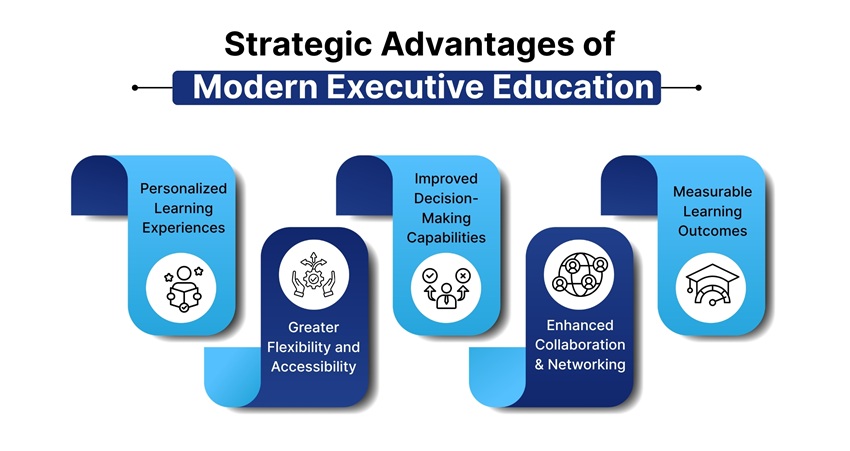
The transformation of executive education brings several key advantages that enhance both learning outcomes and organizational impact:
-
Personalized Learning Experiences
AI-driven platforms adapt content to individual needs, improving engagement and knowledge retention. -
Greater Flexibility and Accessibility
Digital formats allow executives to learn at their own pace and from any location, supporting continuous development. -
Improved Decision-Making Capabilities
Exposure to real-world scenarios and data-driven insights strengthens strategic thinking and problem-solving skills. -
Enhanced Collaboration and Networking
Online platforms connect professionals from diverse backgrounds, enabling the exchange of ideas and global perspectives. -
Measurable Learning Outcomes
Advanced analytics provide insights into learning effectiveness, helping organizations assess the impact of training initiatives.
Lifelong Learning as a Strategic Imperative
The concept of lifelong learning is becoming central to executive education. Leaders are expected to continuously update their skills to remain competitive in an evolving environment. This has led to the development of learning ecosystems that support ongoing education throughout an individual’s career.
Digital platforms, short-term certifications, and modular programs enable executives to engage in continuous learning without disrupting their professional responsibilities. This approach ensures that leaders remain adaptable and capable of responding to new challenges as they arise.
The Future of Executive Education in an AI-Driven World
As artificial intelligence continues to advance, executive education is expected to become more predictive and adaptive, anticipating skill requirements based on industry shifts and individual career paths. Learning models are likely to move beyond reactive approaches, enabling leaders to prepare for emerging challenges before they fully arise. At the same time, immersive technologies such as advanced simulations and virtual environments will play a greater role in leadership development. These tools will offer more interactive and realistic learning experiences that enhance decision-making and strategic thinking.
In parallel, executive education will become more closely integrated with organizational strategy, aligning learning outcomes directly with business objectives. This shift will ensure that education contributes measurable value to performance and innovation. Alongside technological capabilities, there will be a stronger focus on human-centric skills such as ethical judgment, emotional intelligence, and creativity, recognizing their importance in navigating complex, AI-influenced environments.
Conclusion
Executive education is undergoing a fundamental transformation as artificial intelligence reshapes both the nature of leadership and the methods of learning. The shift toward continuous, flexible, and technology-enabled models reflects the growing need for leaders who can navigate complexity and drive innovation. By integrating AI into learning experiences and focusing on practical skill development, executive education is becoming more aligned with the realities of the modern business environment.
At the same time, addressing challenges such as access, data security, and evolving teaching methods will be essential for sustaining progress. As organizations continue to adapt to technological change, executive education will play a critical role in preparing leaders to succeed in an increasingly dynamic and interconnected world.
Frequently Asked Questions
Why is continuous learning important for modern executives?
Continuous learning is essential because technological advancements are rapidly changing skill requirements, making it necessary for executives to regularly update their knowledge to remain effective and competitive.
What skills are most important for executives in an AI-driven environment?
Key skills include digital literacy, data interpretation, strategic thinking, adaptability, innovation management, and the ability to work alongside intelligent systems.
How do digital platforms enhance executive education?
Digital platforms improve accessibility, flexibility, and scalability by allowing executives to learn at their own pace, access global resources, and participate in interactive and collaborative learning environments.
What are the main challenges in adopting AI-driven executive education?
Major challenges include limited access to technology, data privacy concerns, resistance to change, and the need for educators to adapt to new tools and teaching methods.
How does executive education support organizational transformation?
Executive education equips leaders with the skills needed to manage change, implement new technologies, and drive innovation, helping organizations adapt to evolving market conditions.
Latest
Trends blogs
- Preparing Universities for the AI Era: A Guide for Institutional Leaders
- The Future of AI Education: How Universities Are Equipping Students for Success
- Building AI Literacy and Workforce Skills in Higher Education
- Intelligent Learning Systems: The Rise of Agentic AI in Higher Education
Focus blogs