


Adaptive Learning with AI: Benefits, Challenges, and Best Practices for Educators

Digital transformation has significantly reshaped educational environments, introducing new tools that extend beyond content delivery into intelligent learning support systems. Among these developments, adaptive learning powered by artificial intelligence (AI) has emerged as a promising approach to addressing diverse learner needs. Rather than presenting uniform lessons to all students, AI-driven adaptive systems analyze data in real time and adjust instructional pathways, pacing, and feedback based on individual performance patterns. This shift reflects a broader movement toward data-informed teaching and personalized academic support.
As classrooms become increasingly diverse in learning styles, readiness levels, and prior knowledge, educators face mounting pressure to ensure equitable progress for all students. Adaptive learning technologies aim to respond to this challenge by combining analytics, machine learning, and interactive platforms to provide differentiated experiences at scale. However, while the benefits are compelling, implementation involves pedagogical, ethical, and logistical complexities. This article examines the advantages, limitations, and effective practices associated with AI-enabled adaptive learning, offering educators a balanced and strategic perspective.
Understanding Adaptive Learning with AI
Adaptive learning with AI refers to digital systems that modify educational content, assessments, and feedback in response to student data. These platforms collect information from learner interactions, including quiz responses, time spent on tasks, and engagement behaviors. Algorithms then interpret this data to determine appropriate next steps, such as revisiting a concept, advancing to more complex material, or presenting alternative explanations.
Unlike static e-learning platforms, AI-powered systems operate dynamically. They continuously update learner profiles, identifying knowledge gaps and adjusting instructional sequences accordingly. This allows students to move through material at individualized speeds while maintaining alignment with broader curriculum goals. This digital infrastructure has created conditions where adaptive systems can be integrated more seamlessly into classroom environments.
Key Benefits of AI-Driven Adaptive Learning
By using data insights to personalize instructional pathways, AI-driven adaptive learning enables more responsive, efficient, and student-centered educational experiences.
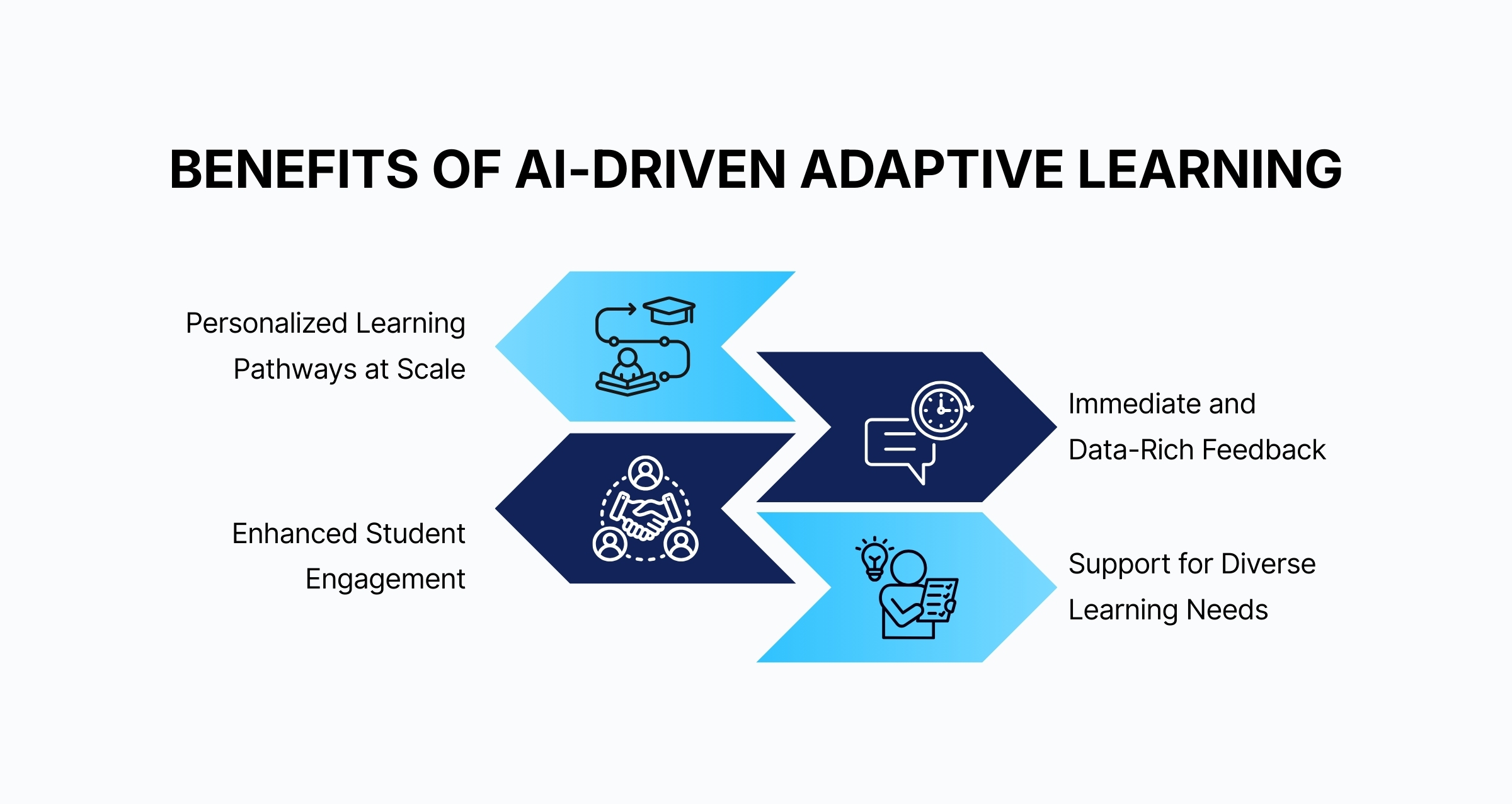
1. Personalized Learning Pathways at Scale
One of the most significant advantages of AI-based adaptive learning is its ability to individualize instruction without overwhelming educators. In traditional classrooms, differentiating content for every learner can be time-intensive and difficult to sustain. Adaptive systems automate portions of this process by adjusting question difficulty, offering targeted remediation, or accelerating advanced learners.
This individualized progression can increase academic confidence and reduce frustration. Students who struggle with certain topics receive additional practice and explanations, while those who grasp material quickly can explore advanced challenges rather than waiting for peers.
2. Immediate and Data-Rich Feedback
Adaptive platforms provide rapid feedback that supports ongoing learning adjustments. Instead of waiting days for graded assignments, students receive instant responses that clarify misunderstandings. Educators also gain access to dashboards displaying performance trends, error patterns, and participation metrics.
This real-time data enables proactive intervention. Teachers can identify struggling students earlier and adjust classroom instruction based on aggregated insights. Over time, these analytics can inform curriculum planning and highlight areas requiring additional emphasis.
3. Enhanced Student Engagement
Interactive adaptive tools often incorporate multimedia elements, gamified features, and dynamic progress tracking. These features can increase motivation, especially for learners who respond positively to visual and interactive formats. By presenting content that aligns with current ability levels, adaptive systems reduce boredom and cognitive overload.
Engagement is particularly critical in online and blended learning contexts. A 2025 survey found that 45% of students interact with AI-based tutoring or adaptive learning platforms at least once per week, demonstrating regular student engagement with these tools. While engagement alone does not guarantee academic success, it plays a central role in sustained participation.
4. Support for Diverse Learning Needs
Classrooms include learners with varied backgrounds, language proficiencies, and academic preparedness. Adaptive systems can provide scaffolding through multimedia explanations, varied assessment formats, and additional practice opportunities. This flexibility may support inclusive education by offering alternative learning pathways without singling out students publicly.
In settings where class sizes are large, AI tools can act as supplementary instructional assistants, providing structured practice while teachers focus on deeper discussions or project-based learning.
Challenges and Considerations
Despite its promise, AI-powered adaptive learning is not without limitations. Thoughtful implementation requires awareness of potential risks and constraints.
1. Data Privacy and Ethical Concerns
Adaptive platforms rely on continuous data collection. This raises concerns about how student information is stored, analyzed, and protected. Educational institutions must ensure compliance with privacy regulations and maintain transparency regarding data usage.
Additionally, algorithmic bias is a significant concern. If training data reflects systemic inequities, AI systems may inadvertently reinforce disparities. Educators and administrators must critically evaluate vendors’ data practices and seek transparency in algorithm design.
2. Overreliance on Technology
While adaptive tools can enhance instruction, they should not replace human interaction. Learning is inherently social and relational. Excessive dependence on algorithmic guidance may reduce opportunities for collaborative discussion, creativity, and critical dialogue.
AI systems excel at pattern recognition but may not fully capture contextual nuances such as emotional readiness or cultural influences. Teachers remain essential in interpreting data and making holistic instructional decisions.
3. Infrastructure and Access Gaps
Successful integration requires reliable internet connectivity, compatible devices, and technical support. In under-resourced environments, limited infrastructure can widen digital divides. Even when technology is available, disparities in digital literacy among educators and students may hinder effective use.
4. Professional Development Needs
Adaptive systems generate extensive data, but educators must understand how to interpret and apply it meaningfully. Without sufficient training, teachers may underutilize available insights or misinterpret analytics. Continuous professional development is therefore critical for maximizing the pedagogical value of AI tools.
In order to address these challenges, educators should consider the following best practices.
Best Practices for Educators Implementing Adaptive Learning
To harness the benefits of AI while mitigating challenges, educators can adopt several evidence-informed strategies.
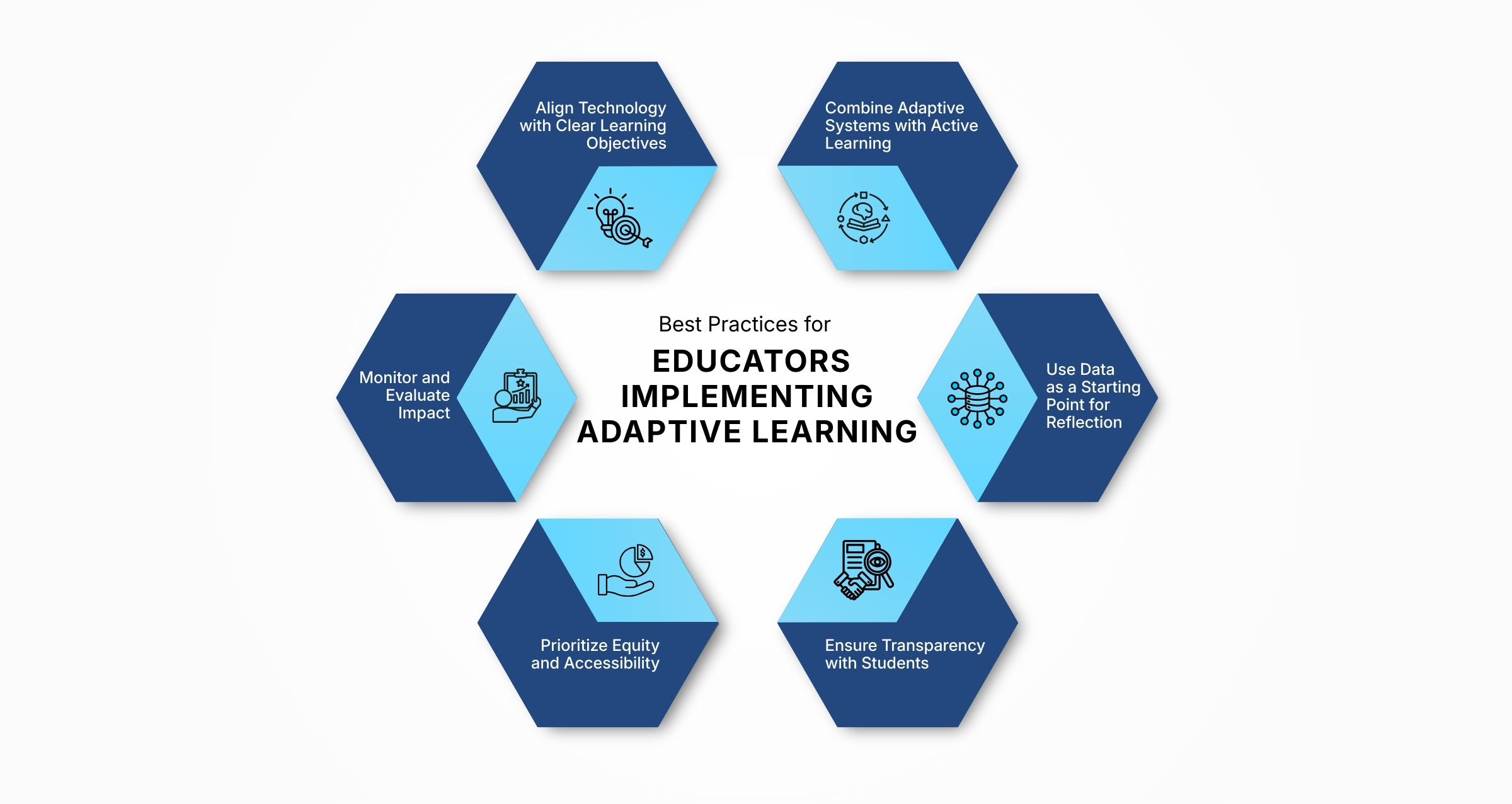
1. Align Technology with Clear Learning Objectives
Adaptive tools should support defined academic goals rather than drive instruction independently. Educators should evaluate whether platform features align with curriculum standards and desired competencies. Clear alignment prevents technology from becoming an isolated add-on.
2. Combine Adaptive Systems with Active Learning
Blending AI-driven practice with collaborative discussions, projects, and inquiry-based tasks ensures balanced instruction. Adaptive platforms can reinforce foundational knowledge, while classroom interactions deepen understanding and application.
For example, students might complete adaptive exercises to master core concepts before engaging in problem-solving workshops or debates. This integration leverages technology for efficiency while preserving human-centered learning experiences.
3. Use Data as a Starting Point for Reflection
Analytics should inform professional judgment rather than dictate decisions. Teachers can review dashboard insights to identify trends, then verify these patterns through observation and dialogue. This approach maintains educator autonomy while benefiting from data-driven insights.
Regular review meetings focused on adaptive learning data can support instructional planning and collaborative problem-solving among teaching teams.
4. Ensure Transparency with Students
Students benefit from understanding how adaptive systems operate. Explaining that content adjusts based on performance can reduce confusion and encourage metacognitive awareness. When learners recognize patterns in their progress reports, they can take greater ownership of improvement strategies. Encouraging students to set personal learning goals within adaptive platforms also promotes accountability and motivation.
5. Prioritize Equity and Accessibility
Institutions should evaluate whether adaptive tools accommodate diverse learners, including those with disabilities or language barriers. Features such as screen reader compatibility, adjustable text sizes, and multilingual options enhance accessibility.
Equity considerations also involve device distribution, technical support, and community outreach to ensure consistent participation across socioeconomic backgrounds.
6. Monitor and Evaluate Impact
Ongoing evaluation is essential. Schools can compare performance data before and after implementation, gather student feedback, and analyze engagement metrics. Continuous assessment allows educators to refine integration strategies and discontinue ineffective tools.
Effective evaluation should consider both quantitative outcomes and qualitative experiences, ensuring that technology enhances rather than disrupts learning environments.
The Future of Adaptive Learning in Education
As machine learning models become more sophisticated, adaptive systems are likely to integrate predictive analytics, natural language processing, and immersive technologies. About 86% of higher education institutions now use AI as a core part of their educational tools, reflecting rapid adoption of AI technologies, including adaptive learning systems. These developments may enable more nuanced feedback and scenario-based simulations across disciplines.
However, technological advancement alone does not guarantee educational improvement. The future of adaptive learning depends on responsible governance, ethical design, and educator leadership. Institutions must balance innovation with critical reflection, ensuring that technology serves academic values rather than overshadowing them.
Adaptive learning with AI represents an evolution in instructional support, not a replacement for professional expertise. Its success relies on thoughtful integration within comprehensive teaching strategies.
Want more expert insights on education, AI, and innovation?
Subscribe to Academik America and get the latest trends, research, and thought leadership delivered straight to your inbox.
Conclusion
Adaptive learning with AI offers meaningful opportunities to personalize instruction, provide immediate feedback, and enhance engagement in diverse classrooms. By analyzing learner data in real time, these systems help educators address knowledge gaps, extend challenges to advanced students, and manage differentiated instruction more efficiently.
At the same time, successful implementation requires careful attention to data privacy, equity, infrastructure, and professional development. Overreliance on algorithmic systems can undermine relational aspects of learning, and insufficient training may limit their potential.
When integrated strategically and ethically, AI-powered adaptive learning can strengthen instructional effectiveness while preserving the central role of educators. By aligning technology with clear objectives, combining it with active learning practices, and continuously evaluating impact, educators can harness adaptive systems as valuable tools in modern education. As digital innovation continues to shape classrooms worldwide, balanced and informed approaches will determine whether adaptive learning becomes a transformative force or merely another technological trend.
Frequently Asked Questions
How is adaptive learning with AI different from traditional e-learning platforms?
Traditional e-learning platforms typically deliver the same content sequence to all learners, regardless of their performance or prior knowledge. Adaptive learning systems, by contrast, use AI algorithms to analyze student interactions in real time and adjust content difficulty, pacing, and feedback accordingly. This creates individualized learning pathways rather than a uniform instructional experience.
Can AI-powered adaptive learning replace teachers?
No. Adaptive learning systems are designed to support instruction, not replace educators. While AI can analyze data patterns and automate certain tasks, teachers provide contextual understanding, emotional support, and critical thinking guidance that technology cannot replicate. Effective implementation combines adaptive tools with professional judgment and interactive teaching practices.
What types of subjects are best suited for adaptive learning technology?
Adaptive learning is particularly effective in subjects that involve sequential skill development, such as mathematics, language learning, and science. However, it can also support other disciplines by reinforcing foundational knowledge before higher-order discussions, projects, or collaborative activities led by educators.
What are the main risks associated with adaptive learning systems?
Key risks include data privacy concerns, potential algorithmic bias, unequal access to digital infrastructure, and overdependence on technology. Institutions must implement strong data protection measures, evaluate platform transparency, and ensure equitable access to devices and connectivity to mitigate these risks.
How can educators measure the effectiveness of adaptive learning tools?
Effectiveness can be evaluated through multiple indicators, including student performance data, engagement levels, completion rates, and qualitative feedback. Comparing outcomes before and after implementation, as well as analyzing long-term retention and skill mastery, provides a more comprehensive assessment of impact.
Latest
Trends blogs
- Governing AI in Higher Education: Balancing Innovation, Accountability, and Risk
- Skills and the Future of Work: How Employer Expectations Are Changing
- The Changing Role of Technology in Education: From Digital Classrooms to AI
- Preparing Universities for the AI Era: A Guide for Institutional Leaders
Focus blogs