


Girls Shaping the Digital Future: Why ICT Skills Are a Must-Have for AI-Driven Careers

As the global economy rapidly transitions toward artificial intelligence (AI) and digital innovation, the demand for advanced technological skills continues to grow across industries. This transformation is reshaping the nature of work while redefining the skills required to participate meaningfully in the modern workforce. In this context, equipping girls with Information and Communication Technology (ICT) skills has become increasingly important to ensure inclusive participation in the AI-driven economy.
International Girls in ICT Day 2026, observed on April 23, centers on the theme “AI for Development: Girls Shaping the Digital Future.” This theme emphasizes the critical role that girls and women play in driving technological advancement and highlights the importance of ensuring equal access to digital education and opportunities. As AI continues to influence sectors ranging from healthcare to finance, empowering girls with ICT skills is essential, serving both individual career growth and the broader goal of building a more equitable and innovative digital future.
The Expanding Role of AI in the Global Economy
Artificial intelligence is no longer confined to specialized industries; it is now embedded in everyday systems, influencing how societies function and how businesses operate. From data analytics and automation to personalized services and smart technologies, AI is reshaping how insights are generated and how services are designed and delivered. This widespread integration has created a strong demand for individuals who possess both technical knowledge and the ability to adapt to evolving digital environments.
The Future of Jobs Report by World Economic Forum indicates that AI-related roles are among the fastest-growing job categories globally, with demand continuing to rise across multiple sectors. This trend highlights the increasing importance of digital competencies, particularly ICT skills, as a foundation for participating in future economies. Without these skills, individuals may find it challenging to access emerging opportunities or contribute effectively to technological advancements.
Why ICT Skills Are Essential in the AI Era
ICT skills are essential for engaging confidently with digital technologies, going beyond basic computer use to include data interpretation, coding fundamentals, digital communication, and an understanding of emerging technologies like AI. These competencies are critical for navigating and contributing to today’s digital landscape, enabling individuals to use technology in meaningful and practical ways.
One of the key benefits of ICT education is its role in strengthening problem-solving and analytical thinking, which are especially important in AI-related fields. With a strong ICT foundation, girls can apply technology to real-world challenges, such as building simple applications to track habits or analyze data. Additionally, ICT skills enhance adaptability in a rapidly evolving job market, supporting employability and helping individuals remain relevant as new technologies continue to emerge.
Closing the Divide: Empowering Girls in Tech Fields
Despite the growing importance of ICT skills, gender disparities in technology education and careers remain a significant concern. Recent data indicates that women make up only around 29% of the global AI workforce, highlighting a persistent gender gap in emerging technology fields. Social norms, limited access to resources, and lack of representation in STEM fields often discourage girls from pursuing technology-related pathways. These barriers can lead to underrepresentation in AI and other high-growth sectors, ultimately affecting both individual opportunities and broader innovation.
Addressing this gap requires a multifaceted approach focused on access, awareness, and encouragement. Early exposure to technology helps build interest and confidence, while equitable access to devices, internet, and quality education ensures inclusion. At the same time, challenging stereotypes and promoting diverse role models can inspire greater participation and reshape perceptions of girls in technology.
The Role of Education in Building ICT Competencies and Real-World Impact
Education systems play a central role in preparing girls for the AI economy by integrating ICT skills as essential components of learning. This enables students to build both theoretical knowledge and practical skills applicable in real-world contexts. Effective ICT education goes beyond technical instruction, promoting exploration, creativity, and critical thinking through approaches such as project-based learning. Equally important is the role of educators, who require proper training, resources, and confidence to deliver ICT content effectively and create inclusive learning environments.
The value of ICT skills becomes clear in their application across sectors such as healthcare and environmental management, where technologies like AI support data analysis, diagnostics, and sustainable solutions. Girls equipped with these skills can contribute meaningfully to addressing global challenges while bringing diverse perspectives that strengthen innovation. This connection between education and real-world impact reflects the broader vision of International Girls in ICT Day 2026, highlighting the importance of empowering girls to shape the digital future.
Strategies to Strengthen ICT Skills Among Girls
Strengthening ICT skills among girls requires a combination of access, support, and targeted learning approaches that address both structural and individual barriers.
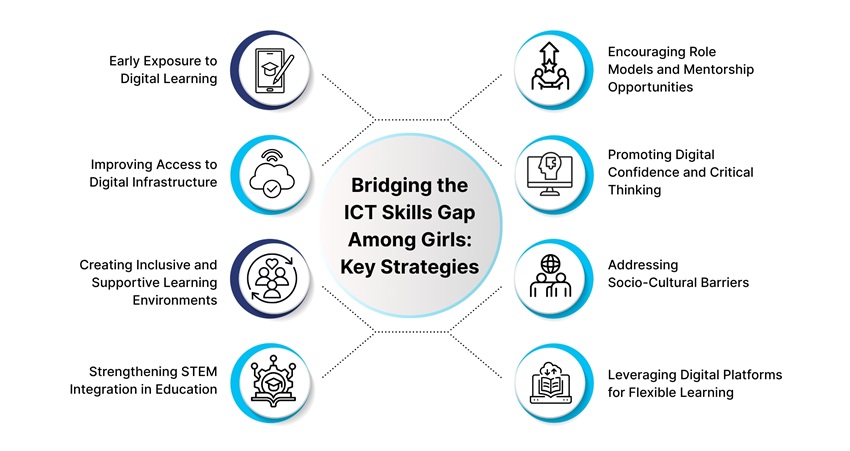
- Early Exposure to Digital Learning
Introducing girls to technology at an early stage plays a crucial role in building confidence and interest in ICT. Early engagement with digital tools and problem-solving activities supports long-term participation in technology-related fields. Integrating basic coding, digital exploration, and interactive learning in primary education helps normalize technology use and reduces hesitation around complex systems.
- Improving Access to Digital Infrastructure
Access remains a foundational requirement for building ICT skills. In many regions, disparities in devices, internet connectivity, and digital learning environments continue to limit opportunities for girls. Expanding access through affordable devices, community digital centers, and school-based labs can help bridge this gap. Consistent access enables continuous learning and practical application of skills.
- Creating Inclusive and Supportive Learning Environments
Learning environments strongly influence participation and retention in ICT education. Classrooms that encourage equal participation, collaboration, and hands-on engagement tend to see higher involvement from girls. Support systems such as peer learning and guided instruction can help address confidence gaps and create a more inclusive atmosphere.
- Strengthening STEM Integration in Education
Embedding ICT within broader STEM education enhances both relevance and application. Connecting digital skills with real-world problem-solving in science and engineering helps learners understand how technology is used across domains. This approach builds technical competence while strengthening analytical thinking and innovation.
- Encouraging Role Models and Mentorship Opportunities
Visibility of women in technology-related fields plays an important role in shaping aspirations. Exposure to relatable role models and mentorship helps girls envision themselves in similar careers. Mentorship programs, guest sessions, and career interactions provide guidance and practical insights into ICT and AI-related pathways.
- Promoting Digital Confidence and Critical Thinking
Beyond technical knowledge, developing confidence in using technology is essential. Encouraging experimentation and independent exploration helps build capability. At the same time, strengthening critical thinking enables girls to evaluate digital information, understand risks, and make informed decisions in complex digital environments.
- Addressing Socio-Cultural Barriers
Societal perceptions and cultural expectations can influence participation in ICT education. Addressing these barriers requires awareness initiatives, community engagement, and inclusive policies that emphasize equal opportunities. Support from families and communities can significantly improve participation and continuity in learning pathways.
- Leveraging Digital Platforms for Flexible Learning
Online platforms and mobile-based tools have expanded opportunities for skill development. They provide flexible access to courses and practical exercises, allowing learners to progress at their own pace. According to the International Telecommunication Union, around 74% of people worldwide are now connected to the internet, significantly expanding access to digital learning opportunities and online skill development. For girls facing accessibility constraints, digital platforms offer an effective pathway to build ICT skills and stay engaged with evolving technologies.
Preparing for Future Careers in an AI-Driven World
As the AI economy expands, the nature of work is evolving, with future roles requiring a blend of technical and soft skills such as creativity, communication, and critical thinking. ICT skills provide a strong foundation for developing these competencies, enabling individuals to adapt to changing demands and engage effectively in digital environments.
Equipping girls with these skills prepares them for both current roles and emerging opportunities, helping build a workforce that is adaptable and resilient. Greater participation of girls in ICT and AI fields also enhances diversity in innovation, leading to more inclusive solutions and a broader range of perspectives in addressing complex global challenges.
Conclusion
The transition to an AI-driven economy presents both opportunities and challenges, making it essential to equip girls with ICT skills for meaningful participation. These skills form the foundation for future-ready careers by enabling innovation, digital engagement, and informed understanding. By addressing access barriers, strengthening education systems, and promoting inclusive participation, girls can thrive in technology-driven fields. This effort, reinforced by the focus of International Girls in ICT Day 2026, highlights the importance of collective action in shaping an equitable and forward-looking digital future.
Latest
Trends blogs
- Governing AI in Higher Education: Balancing Innovation, Accountability, and Risk
- Skills and the Future of Work: How Employer Expectations Are Changing
- The Changing Role of Technology in Education: From Digital Classrooms to AI
- Preparing Universities for the AI Era: A Guide for Institutional Leaders
Focus blogs