


Global Education Technology: Growth Drivers, Challenges, and Evolving Trends

Over the past decade, education technology has evolved into a central force shaping how learning is delivered and experienced worldwide. What was once a supplementary component of education has now become a central pillar in delivering knowledge, enhancing accessibility, and improving learning outcomes. From virtual classrooms and learning management systems to artificial intelligence-driven platforms, education technology continues to reshape how individuals learn and how institutions operate.
As demand for flexible, scalable, and personalized learning solutions grows, the global edtech market is expanding at an unprecedented pace. Estimates suggest that the global e-learning market reached nearly USD 369.7 billion in 2025 and is projected to grow further, driven by rising demand for continuous and lifelong learning. This growth is influenced by multiple factors, including technological advancements, increased internet penetration, and evolving workforce requirements. At the same time, the sector faces notable challenges that must be addressed to ensure equitable and effective implementation. Understanding the key drivers, challenges, and emerging trends is essential to navigating the future of education technology.
Growth Drivers of the Global EdTech Market
Several key factors are contributing to the accelerated growth of the edtech market, reflecting shifts in both education systems and industry needs.
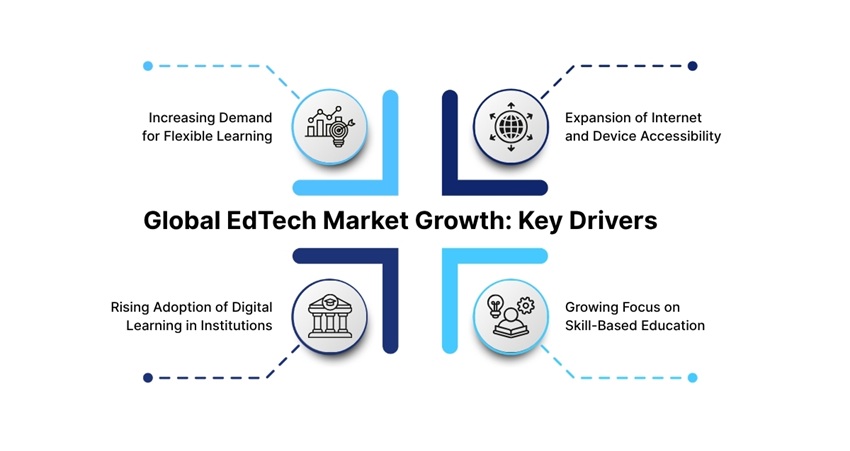
- Increasing Demand for Flexible Learning
One of the most significant drivers of edtech growth is the rising demand for flexible and accessible learning solutions. Learners today seek options that allow them to study at their own pace, and from any location. Digital platforms have made it possible to access educational content without the constraints of traditional classrooms, enabling lifelong learning and continuous skill development.
This shift is particularly relevant in a rapidly changing job market, where individuals need to frequently update their skills. Online courses, virtual training programs, and mobile learning applications provide opportunities for learners to acquire new competencies in a convenient and cost-effective manner.
- Expansion of Internet and Device Accessibility
The widespread availability of internet connectivity and smart devices has significantly contributed to the growth of education technology. As more people gain access to digital infrastructure, the reach of online education continues to expand across regions.
Recent data from the International Telecommunication Union indicates that global internet penetration has exceeded 66% of the population, reflecting a substantial increase in digital accessibility and enabling broader participation in online learning. This expansion has created new opportunities for edtech platforms to reach diverse learner groups, including those in remote and underserved areas.
- Rising Adoption of Digital Learning in Institutions
Educational institutions are increasingly integrating technology into their teaching models. Schools, universities, and training centers are adopting digital tools to enhance learning experiences, improve engagement, and streamline administrative processes.
The adoption of hybrid and blended learning models has become more common, combining traditional instruction with digital resources. This approach allows educators to deliver more interactive and personalized content, while also enabling students to engage with materials beyond the classroom.
- Growing Focus on Skill-Based Education
The global shift toward skill-based education is another key driver of the edtech market. Employers are placing greater emphasis on practical skills and competencies rather than solely on academic qualifications. As a result, learners are seeking platforms that offer targeted training in areas such as digital literacy, data analysis, and emerging technologies.
Edtech platforms are well-positioned to address this demand by offering specialized courses, certifications, and hands-on learning experiences. These platforms provide learners with the tools needed to stay relevant in evolving professional environments.
Key Challenges in the EdTech Ecosystem
While the edtech sector continues to expand, several challenges must be addressed to ensure its effective and equitable implementation.
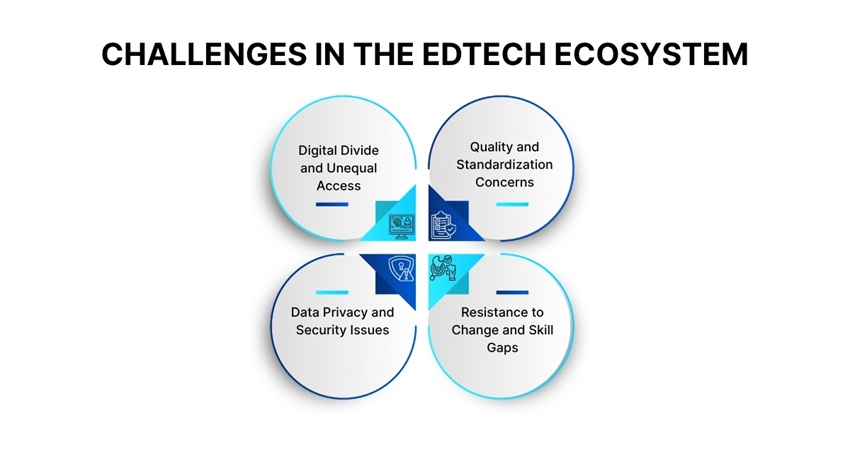
- Digital Divide and Unequal Access
Despite the expansion of digital infrastructure, disparities in access to technology remain a significant challenge. In many regions, limited connectivity, lack of devices, and inadequate infrastructure restrict access to online learning. These barriers can prevent certain populations from benefiting fully from education technology.
Addressing the digital divide requires coordinated efforts to improve infrastructure, reduce costs, and ensure that resources are distributed equitably. Without such efforts, the benefits of edtech may remain unevenly distributed.
- Quality and Standardization Concerns
The fast growth of the edtech market has led to a wide range of platforms and content offerings. While this diversity provides more options for learners, it also raises concerns about the quality and consistency of educational materials.
Ensuring that digital learning content meets established standards is essential for maintaining credibility and effectiveness. This includes evaluating course design, instructional methods, and assessment practices to ensure that learners receive meaningful and reliable education.
- Data Privacy and Security Issues
As education technology relies heavily on digital platforms, concerns related to data privacy and security have become increasingly important. Edtech systems often collect and store sensitive information, including personal data and learning records.
Ensuring robust data protection measures is critical to maintaining trust among users. Institutions and platform providers must implement secure systems and adhere to regulatory requirements to safeguard user information.
- Resistance to Change and Skill Gaps
The integration of technology into education requires both educators and learners to adapt to new tools and methods. In some cases, resistance to change and lack of digital skills can hinder the effective implementation of edtech solutions.
Providing adequate training and support for educators is essential to overcoming these challenges. When educators are confident in using digital tools, they can create more engaging and effective learning experiences.
Evolving Trends in Education Technology
Several emerging trends are shaping the direction of education technology, influencing how learners engage with content and develop skills.
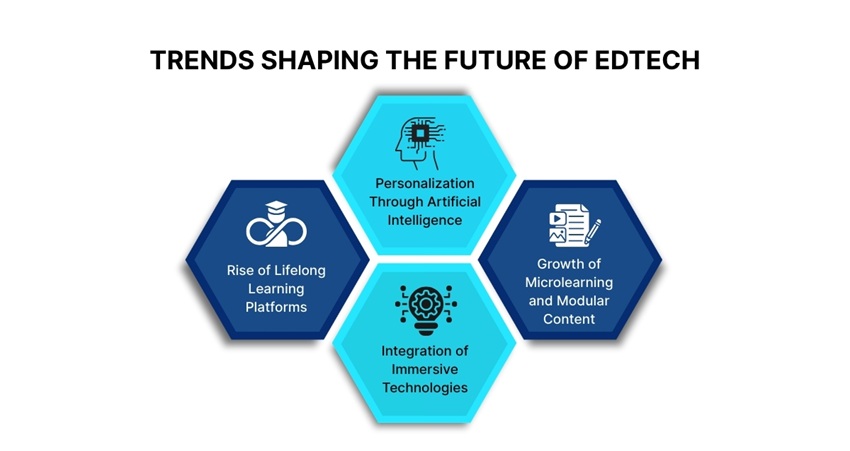
- Personalization Through Artificial Intelligence
Artificial intelligence is playing an increasingly important role in shaping the future of education technology. AI-driven platforms can analyze learner behavior and preferences to deliver personalized content and recommendations. This allows for more targeted learning experiences that cater to individual needs and learning styles.
Personalized learning not only improves engagement but also enhances learning outcomes by addressing specific areas of improvement. As AI technology continues to evolve, its applications in education are expected to expand further.
- Growth of Microlearning and Modular Content
Microlearning has emerged as a popular trend in the edtech space, offering short, focused learning modules that can be completed quickly. This approach aligns with modern learning preferences, where individuals seek concise and easily digestible content.
Modular learning formats allow learners to build knowledge incrementally, making it easier to manage time and retain information. This trend is particularly effective for skill-based training and professional development.
- Integration of Immersive Technologies
Emerging technologies such as virtual reality and augmented reality are being increasingly integrated into education. These tools provide immersive learning experiences that enhance understanding and engagement.
For example, virtual simulations can allow students to explore complex concepts in a more interactive manner, while augmented reality can bring educational content to life. These technologies have the potential to transform traditional learning methods and create more dynamic educational environments.
- Rise of Lifelong Learning Platforms
The concept of lifelong learning is gaining prominence as individuals seek to continuously update their skills throughout their careers. Education technology platforms are responding to this demand by offering a wide range of courses and programs designed for learners at different stages of life.
The Grand View research estimates show that the global education technology market was valued at approximately USD 187 billion in 2025 and is projected to grow significantly in the coming years, reflecting strong demand for digital learning solutions. This growth underscores the importance of edtech in supporting ongoing education and skill development.
Reaching Beyond Classrooms: The Global Impact of EdTech
Education technology has significantly expanded access to learning opportunities on a global scale. By removing geographical barriers, digital platforms enable learners from different regions to access high-quality educational resources. This has opened new pathways for individuals who may not have had access to traditional education systems.
In addition to increasing access, edtech also supports inclusivity by providing diverse learning formats that cater to different needs. For example, adaptive learning tools can assist learners with varying abilities, while multilingual platforms can reach a broader audience.
Furthermore, digital learning environments encourage collaboration and knowledge sharing across borders. Learners can engage with peers and educators from different parts of the world, creating a more interconnected and enriched learning experience.
Balancing Innovation with Accessibility
While innovation continues to drive the evolution of education technology, it is essential to ensure that these advancements are accessible to all learners. The focus should not only be on developing new tools but also on making them inclusive and user-friendly.
Balancing innovation with accessibility involves designing platforms that are easy to use, affordable, and adaptable to different contexts. It also requires addressing challenges such as language barriers, digital literacy, and infrastructure limitations.
By prioritizing accessibility, the edtech sector can ensure that technological advancements contribute to equitable learning outcomes rather than widening existing gaps.
Conclusion
The global education technology market is experiencing quick growth, driven by rising demand for flexible learning, expanding digital access, and evolving workforce needs. As technology continues to reshape education, it creates significant opportunities to enhance learning experiences, improve accessibility, and support lifelong skill development. Emerging trends such as artificial intelligence, microlearning, and immersive technologies are further transforming how education is delivered and experienced, emphasizing the need to adapt to new approaches.
At the same time, challenges including the digital divide, quality concerns, and data security issues must be addressed to ensure sustainable progress. Focusing on inclusive access, effective implementation, and continuous innovation is essential to overcoming these barriers. Ultimately, the future of education technology depends on balancing innovation with inclusivity, enabling the creation of a more accessible, equitable, and dynamic global education system.
Latest
Trends blogs
- Preparing Universities for the AI Era: A Guide for Institutional Leaders
- The Future of AI Education: How Universities Are Equipping Students for Success
- Building AI Literacy and Workforce Skills in Higher Education
- Intelligent Learning Systems: The Rise of Agentic AI in Higher Education
Focus blogs